


 DIFFERENCE

Why the 1969 Chevy Camaro Z/28 Is Still the Most Talked-About Muscle Car
Chevrolet Classics
By Branden Bodendorfer, Director of Marketing, Wheelers Family Auto Group | July 7, 2026
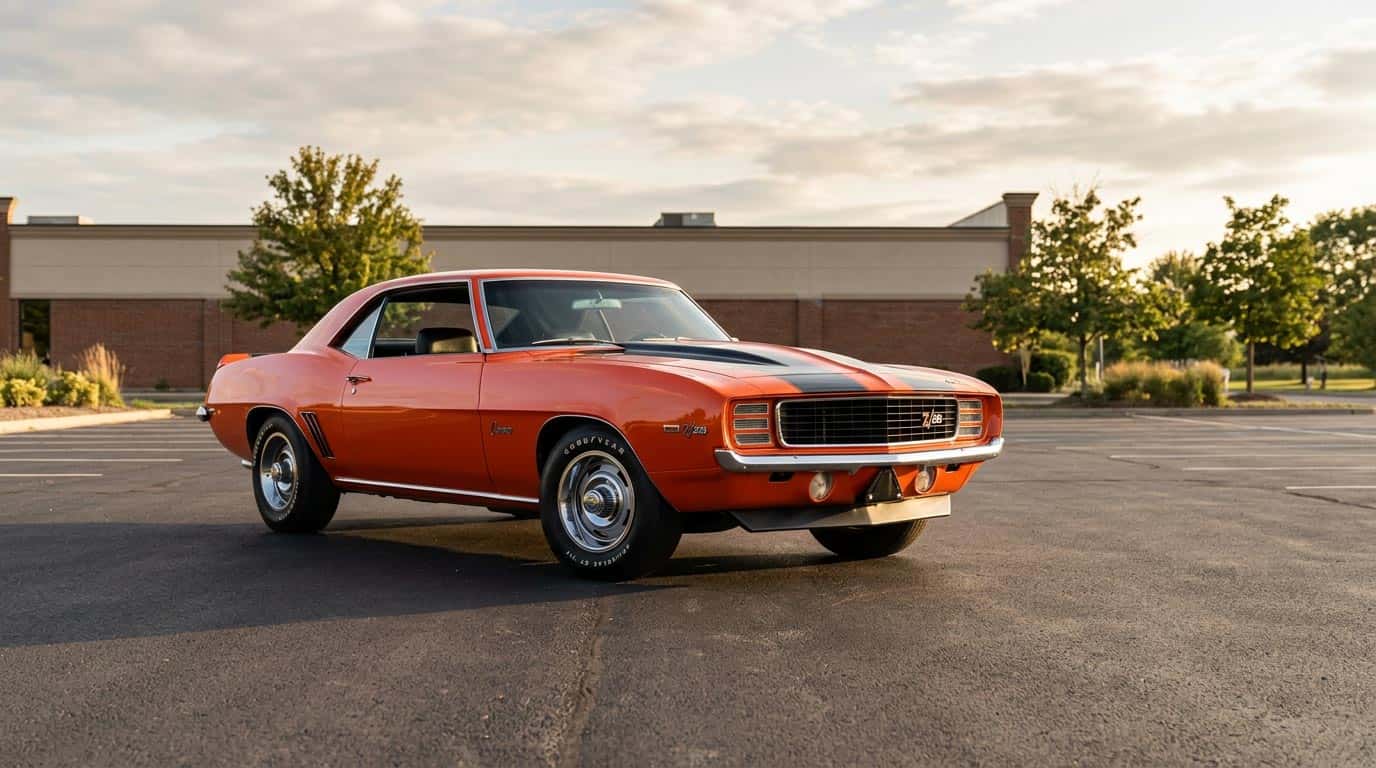
Quick Answer: The 1969 Chevrolet Camaro Z/28 stays at the center of muscle car arguments because Chevy built it to win Trans-Am races, not to win at stoplights. Its high-revving DZ 302 V8, homologation-only build sheet, and back-to-back Trans-Am manufacturer’s titles made a car so purpose-built that collectors and racers are still arguing about it 57 years later.
In This Article
- What Made the 1969 Camaro Z/28 Different From Every Other Camaro
- The DZ 302: An Engine Built to Rev, Not to Cruise
- Trans-Am Roots: Why the Z/28 Existed At All
- Why Collectors and Muscle Car Fans Still Argue About the ’69 Z/28
- What a 1969 Z/28 Is Worth in 2026
- How the Z/28 Shaped Every Camaro That Came After
- FAQ
- Quick Checklist: Spotting a Real 1969 Z/28
- Final Thoughts
Park a 1969 Camaro Z/28 next to almost anything else built that year, and it loses the horsepower argument every time. The SS 396 makes more torque. The Boss 429 down the street at Ford makes a bigger sound. And yet ask ten muscle car people to name the one 1969 muscle car people still argue about, and the Z/28 wins more often than not.
That’s not nostalgia talking. Chevrolet didn’t build the Z/28 to be the fastest car in a straight line. It built the car to win Sports Car Club of America Trans-Am road races, and every street-legal Z/28 that rolled off the line existed because of that single job. The engine, the gearing, the brakes, even the conservative horsepower number on the window sticker, all of it traces back to a rulebook written for a racetrack, not a boulevard. That single-minded focus is exactly what still gets people talking in 2026.
We hear it from customers at our Marshfield store more than you’d think. Somebody’s grandfather’s Camaro comes up in conversation, and within two minutes we’re not talking about the car anymore. We’re talking about Mark Donohue, Roger Penske, and whether the trim tag actually says what the family always claimed it said.
What Made the 1969 Camaro Z/28 Different From Every Other Camaro
Quick Answer: The Z/28 wasn’t a trim level or an appearance package. It was RPO Z28, a homologation special built so Chevrolet could legally race the Camaro in SCCA Trans-Am, and buyers who ordered it were locked into a specific, race-bred combination of parts.
The name itself comes from a regular production option code, not a marketing team. Chevrolet engineer Vince Piggins pitched the idea in 1966: build a Camaro variant that met SCCA Trans-Am’s rules, then sell enough of them to the public to make it legal to race. The rulebook capped engine displacement at 305 cubic inches and required a back seat and a wheelbase under 116 inches. Ordering RPO Z28 got you a 302 cubic-inch V8, the F41 handling suspension, quick-ratio steering, and wide raised-letter tires on seven-inch rims, all locked together as a package.
By 1969 the Z/28 had grown up. Buyers could no longer treat it as an obscure option code nobody noticed. Front disc brakes came standard, a four-speed manual was mandatory (no automatic was ever offered), and a new cowl-induction hood pulled cool air straight from the base of the windshield into the engine. For the first time, Chevrolet also offered a genuine four-wheel disc brake option, RPO JL8, and dealers moved only about 206 sets, most of them onto cars headed straight for a race trailer.
Here’s the part that still surprises people: Chevrolet never intended the Z/28 to be practical. That’s the whole point. No back seat room to speak of, a solid-lifter engine that hated idling in traffic, and a suspension tuned for a road course instead of a pothole. It was a race car with a VIN, sold to the public because the rules said it had to be.
The DZ 302: An Engine Built to Rev, Not to Cruise
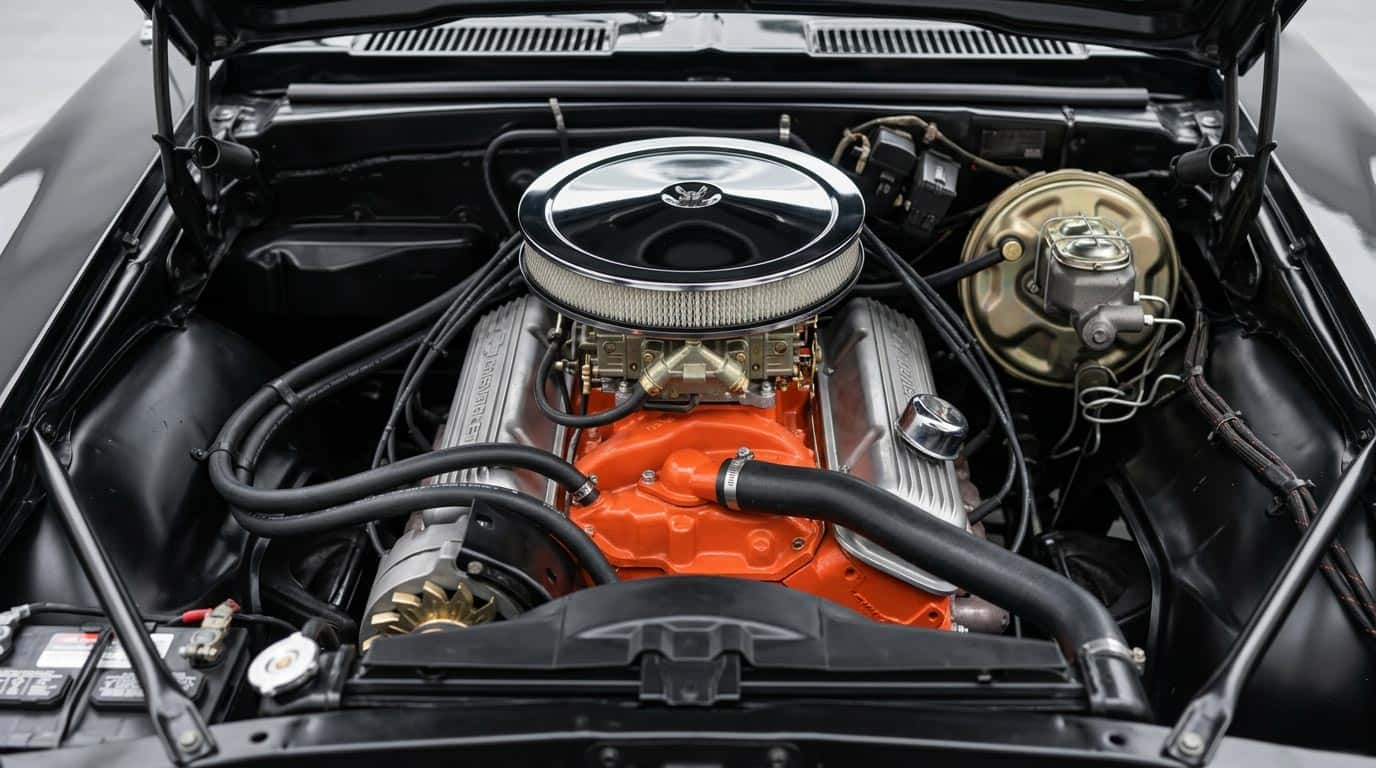
The DZ 302’s forged internals and solid-lifter cam let it rev toward 7,000 rpm, well beyond what most factory small-blocks of the era could handle.
Quick Answer: The DZ 302 combined a 327’s four-inch bore with a 283’s three-inch stroke, landing at 302.4 cubic inches, just under Trans-Am’s 305-cubic-inch ceiling, and Chevrolet built the whole thing to live near 7,000 rpm.
That bore-and-stroke mashup wasn’t a shortcut. It was the entire engineering brief. Chevrolet needed a small-block that could rev like nothing else on the market while staying legal for road racing, so engineers built one from spare parts that happened to fit the rulebook perfectly. The result carried forged internals, a solid-lifter camshaft nicknamed the “30-30” for its aggressive valve timing, a dual-plane high-rise intake, and a single 780-cfm Holley four-barrel. For 1969 only, buyers could special-order an aluminum cross-ram intake with dual 585-cfm Holleys instead, an option so rare that finding one on an unrestored car today makes collectors do a double take.
Chevrolet rated the DZ 302 at 290 horsepower at 5,800 rpm. Nobody who has actually driven one believes that number. Period road tests and later dyno pulls put real output well north of 350 horsepower with the stock carburetor, and closer to 400 with the cross-ram setup. A factory rating from 1969 tells you almost nothing about what an engine actually made. GM kept advertised numbers artificially low across its performance lineup that year, partly to dodge insurance company attention and partly to stay under an internal corporate horsepower-per-pound ceiling. The number on the Z/28’s window sticker was never the real story.
The engine paired exclusively with a close-ratio Muncie four-speed, typically the M21, with the heavier M22 “Rock Crusher” available for cars ordered with the solid-lifter cam. Standard rear gearing ran 3.73:1, with ratios as steep as 4.56 available for buyers who wanted the car to live entirely above 5,000 rpm.
Trans-Am Roots: Why the Z/28 Existed At All
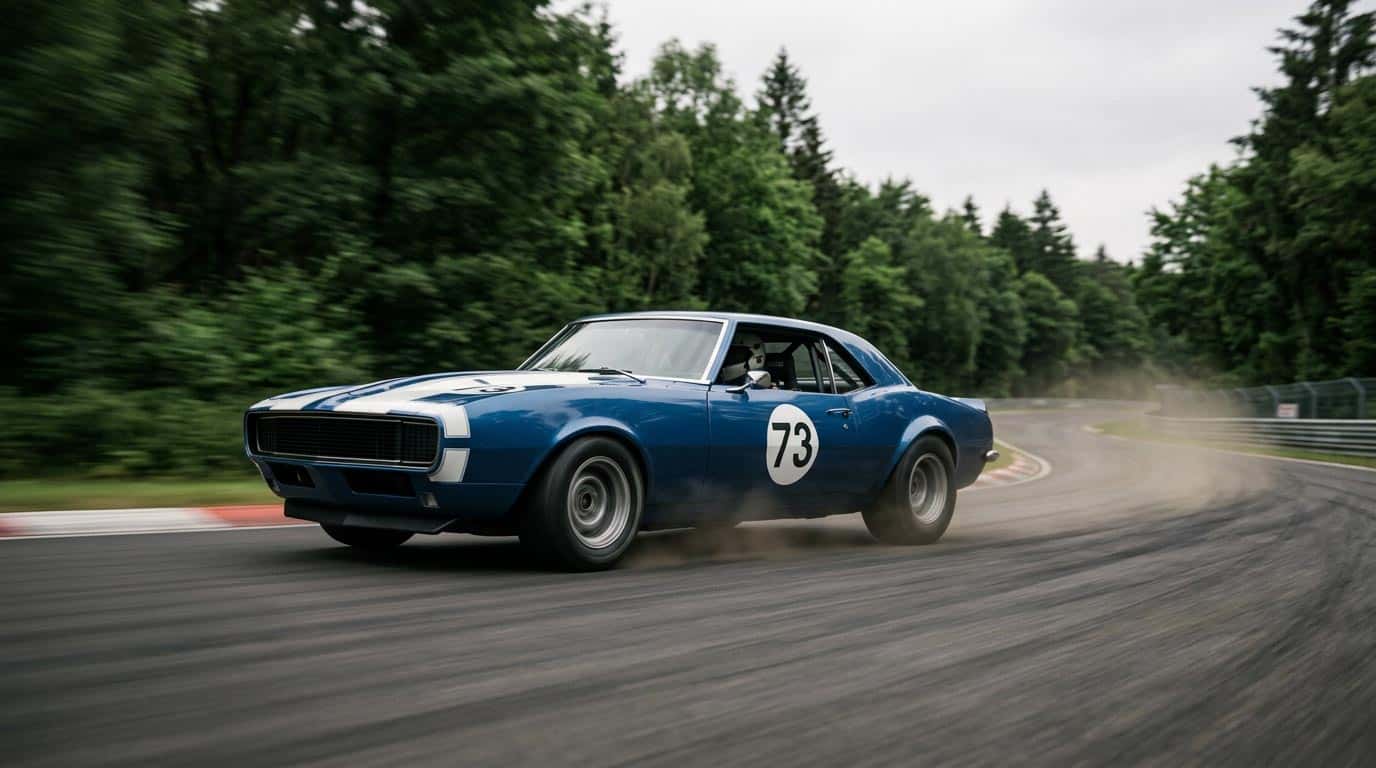
Roger Penske’s Sunoco-liveried Trans-Am Camaros carried Chevrolet to back-to-back manufacturer’s titles in 1968 and 1969.
Quick Answer: Roger Penske’s Sunoco-liveried Camaros, driven by Mark Donohue, won the SCCA Trans-Am manufacturer’s championship in both 1968 and 1969, and every Z/28 sold to the public existed only because Chevrolet needed those race wins to count.
Homologation is a simple idea with a strange result: to race a certain car, a manufacturer first has to sell enough street versions of it to the public. Chevrolet built the Z/28 backward from that requirement. Win the series, then let the public buy the same basic hardware that won it. Penske’s team, self-styled “Team Unfair Advantage,” took ten of thirteen races in 1968 and repeated as champion in 1969, going head-to-head with Ford’s factory-backed Mustangs and American Motors’ Javelins the entire way.
That rivalry is why 1969 sales exploded compared to the car’s quiet 1967 debut. Only 602 Z/28s sold in that first year, largely because Chevrolet used a loophole rather than hitting a real production minimum. Sales nearly tripled between 1968 and 1969, landing at roughly 20,300 units for the model year, a record that stood until 1978.
The street car and the race car were never far apart. Strip the emissions equipment and the smog pump off a stock 1969 Z/28, and you’re most of the way to a genuine Trans-Am contender. That’s not true of most muscle cars from the era, and it’s the single biggest reason the Z/28 still gets treated differently than a Chevelle SS or a Road Runner. This one actually raced, and won, under its own name.
Why Collectors and Muscle Car Fans Still Argue About the ’69 Z/28
Quick Answer: The argument isn’t whether the Z/28 belongs among the great muscle cars. It’s whether verified originality, the cross-ram intake, or the RS appearance package matters more to a car’s identity, and after decades of forums and auctions, enthusiasts still haven’t settled it.
Verification is where things get genuinely difficult. There’s no Z/28 code stamped into the VIN for 1967 through 1969 cars. Proving a car is a real one means digging through the original trim tag, the Protect-O-Plate, the build sheet if it survived, and the engine pad’s suffix code, DZ for 1969 cars specifically. Norwood-built cars carry Fisher Body X-codes, X33 or X77, that hint at a Z/28-related build, but Van Nuys cars carry no such marker at all. None of that paperwork is a substitute for matching, dated components.
We field calls every summer from people around Central Wisconsin trying to confirm whether a grandfather’s or an uncle’s old Camaro is the real thing before they list it for sale. About half the time, an original trim tag and a clean build sheet settle it in ten minutes. The other half takes a specialist, a stack of documentation, and sometimes a disappointing answer. That gap between family legend and provable fact is exactly why the car keeps generating conversation instead of settling into quiet consensus.
Even among verified cars, enthusiasts don’t agree on what matters most. Some chase the cross-ram intake because so few survive. Others want the four-wheel disc option for the same reason. Purists argue an RS-appearance Z/28 is a compromise, a Camaro built to be looked at as much as driven, while other collectors treat the RS/Z28 combination as the most complete version of the car. None of those camps is wrong, which is exactly why the debate never really ends.
What a 1969 Z/28 Is Worth in 2026
Quick Answer: First-generation Z/28 Camaros average roughly $108,847 at auction, according to Classic.com market data, with the top recorded sale reaching $330,000 for a documented 1969 RS Z/28 and a Mecum sale in May 2026 closing at $280,000.
Money follows the same debate that drives the car’s reputation. A clean, honestly documented ’69 Z/28 with a matching-numbers engine already commands a strong number. Add the cross-ram intake, the JL8 four-wheel disc option, or Jerry MacNeish certification, and the same basic car can jump into six figures without much argument from bidders. Condition matters, obviously, but paperwork and rarity of factory options move the needle harder on a Z/28 than on almost any other muscle car from the era.
That’s not a fluke of a hot market. It’s the direct result of a car that was genuinely rare in its most desirable configurations from the day it left the factory. Only 206 sets of JL8 brakes went out the door. The cross-ram intake was a mid-year, low-take-rate option most buyers never checked on the order form. Scarcity that real doesn’t fade the way trend-driven collector values sometimes do.
How the Z/28 Shaped Every Camaro That Came After
The 1969 car was also the end of an era. For 1970, Chevrolet swapped the DZ 302 for a 350-cubic-inch LT-1, a more powerful engine on paper that traded away the short-stroke, high-winding character that made the original so distinct. The Z/28 name kept going through five more Camaro generations, all the way to the car’s final production run in 2024, but the 1969 version remains the one every later Z/28 gets measured against.
That’s a strange kind of legacy for a car Chevrolet built almost reluctantly, purely to satisfy a racing rulebook. It became the standard the nameplate has chased for more than fifty years, on a Camaro nobody at Chevrolet expected to become a legend when the paperwork for RPO Z28 first crossed a desk in 1966.
FAQ
How many 1969 Camaro Z/28s were built?
Chevrolet built roughly 20,300 units for the 1969 model year, up from 7,199 in 1968 and just 602 in the car’s 1967 debut.
What engine came in the 1969 Camaro Z/28?
Every 1969 Z/28 came with the DZ 302 cubic-inch V8, rated at a conservative 290 horsepower and paired exclusively with a Muncie four-speed manual.
Was the 1969 Z/28’s horsepower rating accurate?
No. Chevrolet’s factory rating of 290 horsepower was widely understated. Independent dyno testing and period road tests put real output well above 350 horsepower with the stock carburetor.
How fast was a stock 1969 Camaro Z/28?
Car Life’s period road test recorded a 7.4-second 0-to-60 time and a quarter-mile of about 15.1 seconds at roughly 95 mph, figures still cited in most Camaro reference books today.
How can I tell if a Camaro is a real 1969 Z/28?
There’s no Z/28 code in the VIN for these years. Verification relies on the original trim tag, Protect-O-Plate, build sheet, and the engine’s DZ suffix code, cross-checked against known casting and stamp dates.
What is a 1969 Camaro Z/28 worth today?
Auction data from Classic.com puts the average sale price near $108,847, with top documented examples, including rare RS Z/28 combinations, reaching into the $280,000 to $330,000 range.
Quick Checklist: Spotting a Real 1969 Z/28
- Confirm the trim tag and body style match a Z/28-eligible coupe (the package was never offered on the convertible).
- Check the engine pad for the DZ suffix code and match the casting and stamp dates to a 1969 build window.
- Look for a Fisher Body X33 or X77 code on Norwood-built cars (Van Nuys cars won’t carry one).
- Ask for the Protect-O-Plate and original build sheet, if they survived, and cross-reference option codes.
- Verify the four-speed transmission and power front disc brakes, both mandatory with RPO Z28.
- For high-dollar claims, request third-party documentation such as a Jerry MacNeish certification before treating a car as fully verified.
Final Thoughts
The 1969 Camaro Z/28 earns its reputation the hard way: through a rulebook, a racetrack, and an engine that never wanted to sit still at a stoplight. Fifty-seven years later, that combination still starts more arguments at car shows than almost anything else built during the muscle car era, and it’s not going to stop anytime soon.
If the Z/28’s story has you thinking about what’s parked in your own driveway, whether that’s a project worth finishing or a modern Camaro you’re ready to trade toward something new, our team at Wheelers Family Auto Group can help you explore current Camaro inventory or get a real number on a trade-in value. Stop by one of our Central Wisconsin locations, or contact us and we’ll talk cars, old or new.
About the Author
Branden Bodendorfer is Director of Marketing for Wheelers Family Auto Group, a six-rooftop Chevrolet and GMC dealer group serving Central Wisconsin since 1964. He writes about GM history, new and classic Chevrolet and GMC vehicles, and the Central Wisconsin communities Wheelers serves.
Sources
- Old Cars Weekly, “Car of the Week: 1969 Camaro Z/28”
- Silodrome, “Crate Engine: A Rare 1969 Camaro Z/28 DZ 302 V8”
- Audrain Automobile Museum, 1969 Chevrolet Camaro Z/28 2 Door Coupe
- HowStuffWorks, “1969 Chevrolet Camaro Z28: A Profile of a Muscle Car”
- Classic.com, Chevrolet Camaro Z/28 1st Gen Market Data
- ConceptCarz, 1969 Chevrolet Camaro Valuation Guide


0 comment(s) so far on Why the 1969 Chevy Camaro Z/28 Is Still the Most Talked-About Muscle Car