


 DIFFERENCE

2026 Chevy GMC Infotainment Camera System Explained
Technology
By Branden Bodendorfer, Director of Marketing, Wheelers Family Auto Group | September 14, 2026
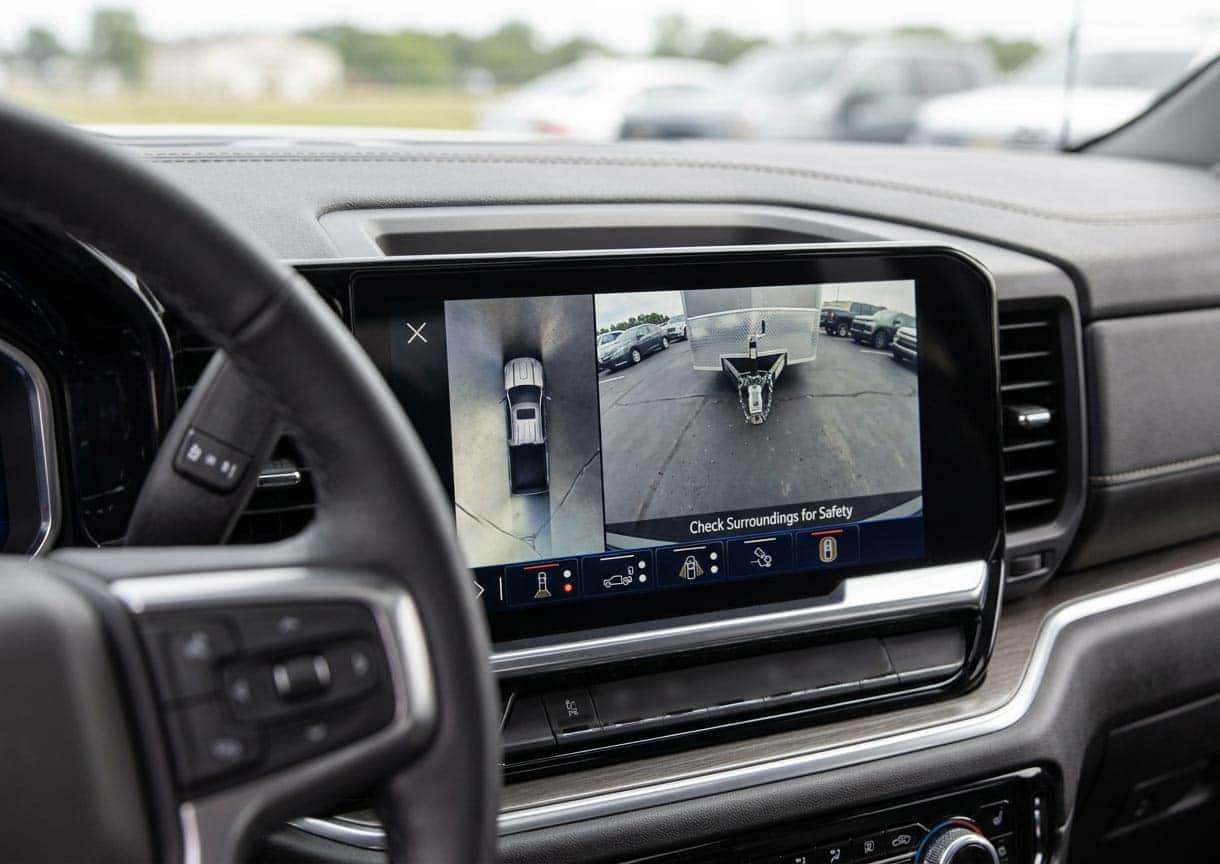
Quick Answer: The 2026 Chevy and GMC infotainment system runs on a 13.4-inch touchscreen with Google built in, and the real story behind it is the camera suite riding along with it, up to 14 available views pulled from as many as 8 cameras. Surround Vision gives you a bird’s-eye view for tight parking lots. Transparent Trailer View makes your trailer look invisible on screen so you can see traffic behind it. Hitch View and Bed View turn hooking up a trailer into a one-person job. Here’s what each camera actually does and which trims get them.
In This Article
- The Screen Itself: 13.4 Inches and Google Built In
- HD Surround Vision: Your Digital Spotter
- Transparent Trailer View: How It Actually Works
- Hitch View and Bed View: The Towing Cameras
- Which Trims Get Which Cameras
- FAQ
- Quick Checklist: Getting the Most Out of the Camera System
- Final Thoughts
Most people notice the screen first. It’s the biggest thing in the cabin, it’s the first thing a salesperson points to, and it’s genuinely nicer than what was in a Silverado or Sierra five years ago. But the screen is really just the display end of a camera system that does most of the actual work, and that system is worth understanding on its own terms.
Chevy and GMC put as many as 8 cameras on a single truck for 2026, generating up to 14 distinct views. That’s not a marketing number padded with redundant angles. Each one solves a specific, real problem: parking in a tight lot, backing a trailer you can’t see past, or lining up a hitch by yourself without a second person waving you back.
The screen gets the attention, but the cameras are doing the actual work. A bigger display doesn’t help you back up straight. Better camera angles do.
The Screen Itself: 13.4 Inches and Google Built In
On LT trim and above across the Silverado and Sierra lineups, the infotainment display grows to 13.4 inches diagonal, paired with a 12.3-inch digital Driver Information Center behind the wheel. Google built-in means Google Maps and Google Assistant run natively on the system, not through your phone, alongside wireless Apple CarPlay and Android Auto for people who’d rather stay in their own ecosystem.
The bigger screen matters more than it sounds like it should, mainly because of what it’s displaying. A tiny screen showing a 360-degree camera feed is nearly useless. A 13.4-inch one actually lets you see the gap between your bumper and the car next to you.
HD Surround Vision: Your Digital Spotter
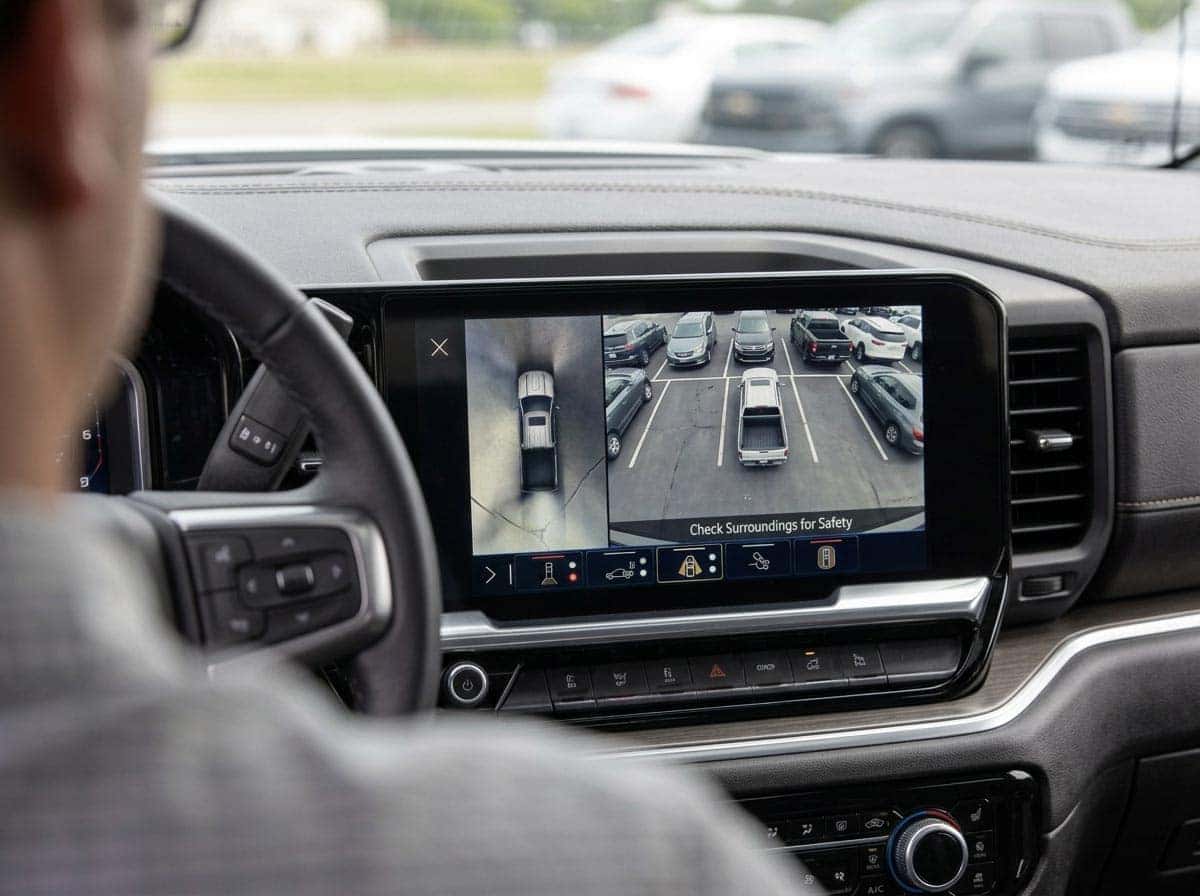
HD Surround Vision stitches together feeds from cameras mounted around the vehicle into a single bird’s-eye view of the truck and its surroundings, projected right on the center screen. It’s standard on every 2026 Tahoe and Suburban trim, including the base LS, which is a meaningful shift since surround-view cameras used to be reserved for loaded trims only.
The system works in full darkness too. The digital cameras are sensitive enough to use the vehicle’s own headlights, taillights, and reverse lights to produce a clear image at night, not just in daylight parking lots.
Transparent Trailer View: How It Actually Works
This is the feature that gets people’s attention the first time they see it, and it’s also the most misunderstood. Transparent Trailer View doesn’t use X-ray vision or some kind of camera trick built into the truck alone. It requires an accessory camera mounted on the back of your trailer, which feeds video to the truck’s system. Software then stitches that trailer-mounted feed together with the truck’s own tailgate camera, digitally erasing the trailer from the image so you can see the road, traffic, and lane markers directly behind it while towing.
That distinction matters if you’re shopping for the feature. Without the trailer-mounted accessory camera, you don’t get the “see-through” effect. You still get a normal rear camera, just not the composite trick. If towing is a regular part of how you use your truck, ask specifically whether the trailer camera accessory is included or needs to be added separately.
Hitch View and Bed View: The Towing Cameras
Two more camera views handle the parts of towing that used to require a second person standing in the driveway waving you backward.
Hitch View gives you a high-definition, top-down look at your hitch ball and coupler, with a one-touch zoom feature for lining things up precisely. Hooking up a trailer solo goes from a guessing game to something you can actually see clearly on screen.
Bed View lets you check on cargo, a fifth-wheel connection, or a gooseneck hitch from the driver’s seat, including while the truck is moving, which matters if you’re hauling something that needs a periodic glance without pulling over.
Trailer Side Blind Zone Alert rounds out the towing-specific tech, extending your truck’s blind-spot monitoring to cover the full length of a compatible trailer, not just the truck itself, which is the kind of feature you don’t think about until you’re merging with a 20-foot trailer behind you.
Which Trims Get Which Cameras
Camera availability tracks fairly closely with trim level and screen size. The 13.4-inch Google built-in display generally starts at LT trim and above on Silverado and Sierra, and that’s also where the fuller camera suite, including Transparent Trailer View compatibility, tends to live. Base trims typically still include a standard rearview camera, but the more advanced views get added as you move up the lineup.
HD Surround Vision is the exception worth knowing about. On the redesigned 2026 Tahoe, Suburban, and Traverse, it’s standard across every trim, base LS included, rather than reserved for the top of the lineup the way it used to be.
FAQ
Do I need to buy anything extra for Transparent Trailer View to work?
Yes. You need a compatible trailer fitted with an accessory camera that feeds video back to the truck. Without it, you get a standard rear camera view, not the composite “see-through” effect.
How many cameras does a 2026 Silverado or Sierra actually have?
Up to 8 physical cameras positioned around the vehicle, generating as many as 14 distinct viewing angles depending on configuration and trim.
Does HD Surround Vision work at night?
Yes. The cameras are sensitive enough to use the vehicle’s own headlights, taillights, and reverse lights to produce a usable image in full darkness.
What’s the difference between Hitch View and Bed View?
Hitch View is a top-down, zoomed angle for aligning your hitch ball and trailer coupler before you connect. Bed View monitors what’s happening in the bed itself, including a fifth-wheel or gooseneck connection, and can be used while driving.
Is the 13.4-inch screen available on every trim?
No. It’s generally offered starting at LT trim and above on Silverado and Sierra. Lower trims typically run a smaller standard display.
Can I save settings for more than one trailer?
Yes. The in-vehicle trailering app supports multiple saved trailer profiles, so switching between a boat trailer and a utility trailer doesn’t mean reconfiguring settings every time.
Quick Checklist: Getting the Most Out of the Camera System
- Confirm which trim you’re looking at includes the 13.4-inch Google built-in display, since camera capability generally follows screen size.
- Ask specifically whether Transparent Trailer View’s trailer-mounted accessory camera is included or sold separately.
- If you tow more than one trailer, set up a saved profile for each one in the trailering app.
- Test Hitch View and Bed View in person before you buy if solo hitching is a regular part of how you’ll use the truck.
- Don’t assume every trim gets every camera view. Ask which specific views come with the trim you’re considering.
Quick Answers
- How many camera views does the 2026 system offer? Up to 14, from as many as 8 physical cameras.
- What screen size comes with Google built-in on Silverado and Sierra? A 13.4-inch diagonal touchscreen, generally starting at LT trim.
- Does Transparent Trailer View work without extra hardware? No. It requires an accessory camera mounted on the trailer itself.
- Is HD Surround Vision standard on the 2026 Tahoe? Yes, across every trim including the base LS.
Final Thoughts
The infotainment screen gets the showroom attention, but the camera system underneath it is where the real usefulness lives, especially if towing, hauling, or tight parking is part of your regular routine. Knowing which views come standard and which need an accessory camera means you’re not surprised by the difference between the demo unit and the truck actually parked on the lot.
Want to see the camera system in action before you decide? Browse new Silverado inventory, Sierra inventory, or contact us to schedule a test drive and see it for yourself.
About the Author
Branden Bodendorfer is Director of Marketing for Wheelers Family Auto Group, a six-rooftop Chevrolet and GMC dealer group serving Central Wisconsin since 1964. He writes about GM technology, new and classic Chevrolet and GMC vehicles, and the Central Wisconsin communities Wheelers serves.
Sources
- Chevrolet.com, Silverado 1500 and Silverado HD technology and trailering documentation
- GMC.com, Sierra HD trailering and camera system documentation
- Chevrolet.com, HD Surround Vision feature overview


0 comment(s) so far on 2026 Chevy GMC Infotainment Camera System Explained