


 DIFFERENCE

5 Times GM Changed the Auto Industry
Quick Answer
GM didn’t just build cars. The company invented systems every automaker on earth still uses today — from the automatic transmission to the catalytic converter to the way dealers finance vehicles. Five specific moments explain how one company rewrote the rules for everyone else.
In This Article
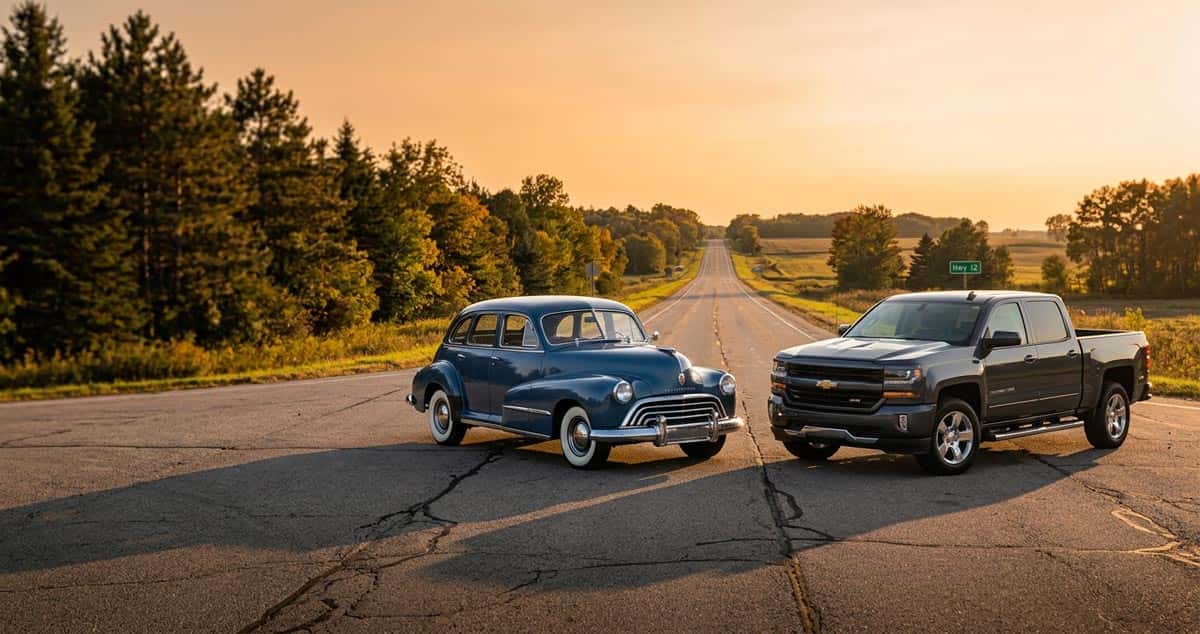
GM has been around since 1908. That’s a long time to get things right — and wrong. But across more than a century, the company kept landing on moves that didn’t just help Chevrolet or Buick sell more cars. They changed what the entire industry built, how it sold, and what governments required. Toyota, Ford, Volkswagen — they all operate inside systems GM helped create.
Here at Wheelers, we sell Chevrolet and GMC across central Wisconsin. We know this brand well. And knowing the history doesn’t just make for good conversation — it explains why the trucks and SUVs we sell today work the way they do. Five GM moves stand out above the rest.
“Every major automaker on earth still uses systems GM invented. That’s not marketing copy. That’s the actual history.”
1. The Automatic Transmission (1940)
The short version: GM introduced the Hydra-Matic in 1940 on the Oldsmobile. It was the first mass-produced fully automatic transmission. Within a decade, every major American manufacturer was offering one. Today, roughly 96% of vehicles sold in the U.S. are automatic.
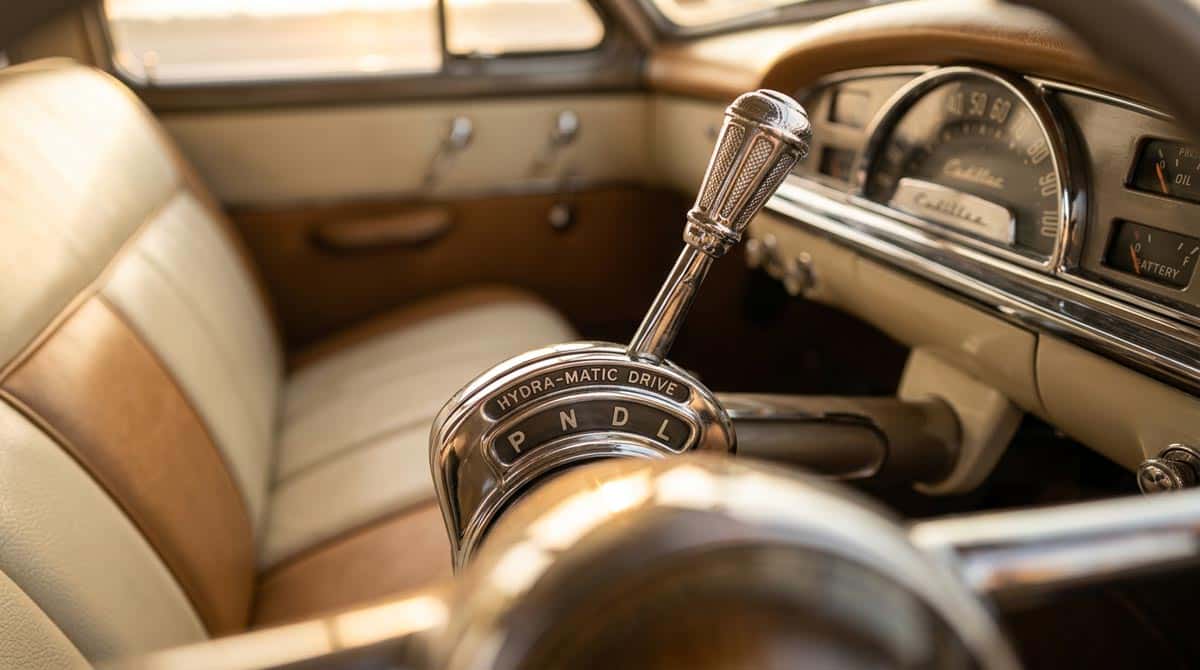
Before the Hydra-Matic, driving required three pedals, a clutch, and a decent amount of skill. Most people learned, but it kept the barrier to entry real. GM’s engineers spent years solving the problem, and when the Hydra-Matic launched on the 1940 Oldsmobile, it cost $57 extra — about $1,200 in today’s dollars. Buyers paid it anyway. Nearly 200,000 Hydra-Matic units sold across the first two model years before wartime halted civilian production in early 1942.
The military noticed. During World War II, GM produced Hydra-Matic units for armored vehicles and tanks. After the war, the technology came back to the civilian market — refined, cheaper to build, and proven under extreme conditions. Ford and Chrysler had to respond with their own automatics. They did. The manual transmission went from default to specialty product inside a single generation.
That ripple is still moving. The 10-speed automatic in a current Silverado 1500 traces a direct line back to that 1940 Oldsmobile. So does the automatic in a BMW, a Toyota Camry, and a Honda CR-V. The execution evolved. The concept is still GM’s.
2. Installment buying changed who could afford a car
The short version: In 1919, GM created the General Motors Acceptance Corporation (GMAC) to let buyers pay for cars over time. It was the first large-scale auto financing company. Before GMAC, you bought a car with cash or you didn’t buy one at all.
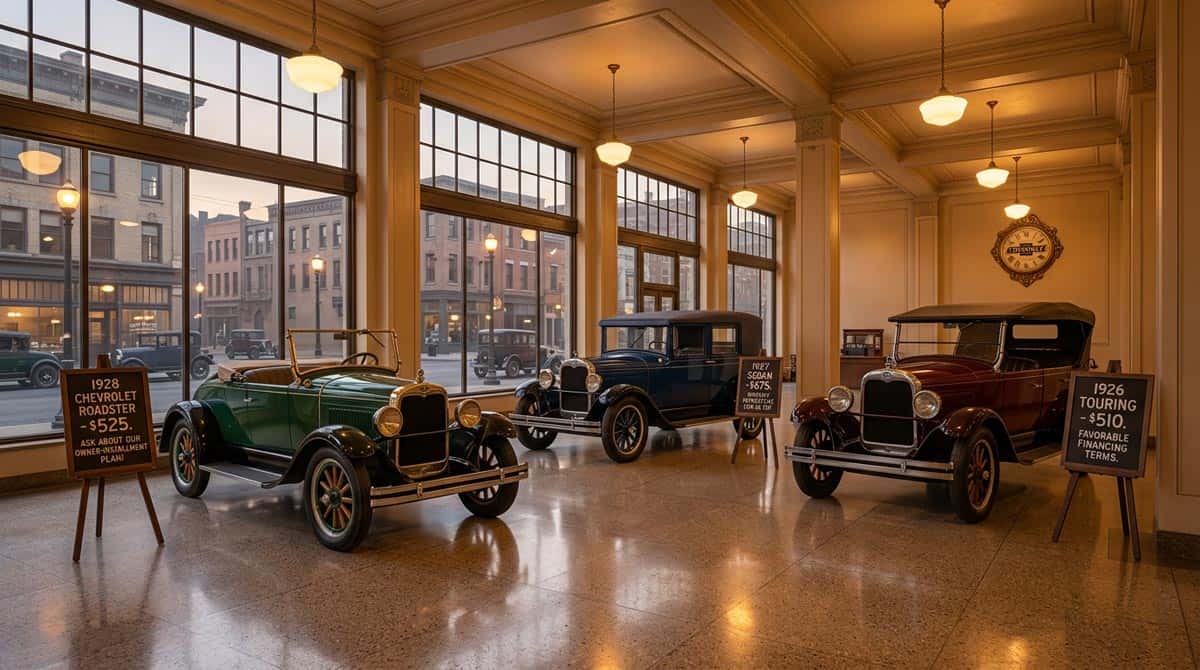
Henry Ford famously hated installment buying. He thought credit was morally questionable and that people should save up and pay cash. That stance helped GM pass Ford as the top-selling automaker in the U.S. by the late 1920s. Turns out people liked buying what they couldn’t yet afford in full.
GMAC did something else worth noting: it made the dealer model work at scale. Dealerships didn’t have to wait for full cash payment from customers. They could sell more units, turn inventory faster, and finance floor plan inventory through the same company. The modern franchise dealership system — the one Wheelers operates in today — runs on a structure GMAC made possible.
By 1925, roughly 75% of all new cars in America were being purchased on installment plans. Ford eventually gave up his stance and launched his own financing arm. The rest of the industry followed. Consumer auto lending is now a multi-trillion-dollar market worldwide. It started because GM decided cash-only was leaving too many buyers on the table.
“Ford thought installment buying was morally questionable. GM thought it was a growth strategy. GM was right.”
3. Annual styling and the model year cycle
The short version: In the 1920s, GM president Alfred Sloan introduced annual styling changes and a tiered brand lineup (Chevrolet, Pontiac, Oldsmobile, Buick, Cadillac) designed to give buyers a reason to upgrade. It created the model year cycle every automaker uses today.
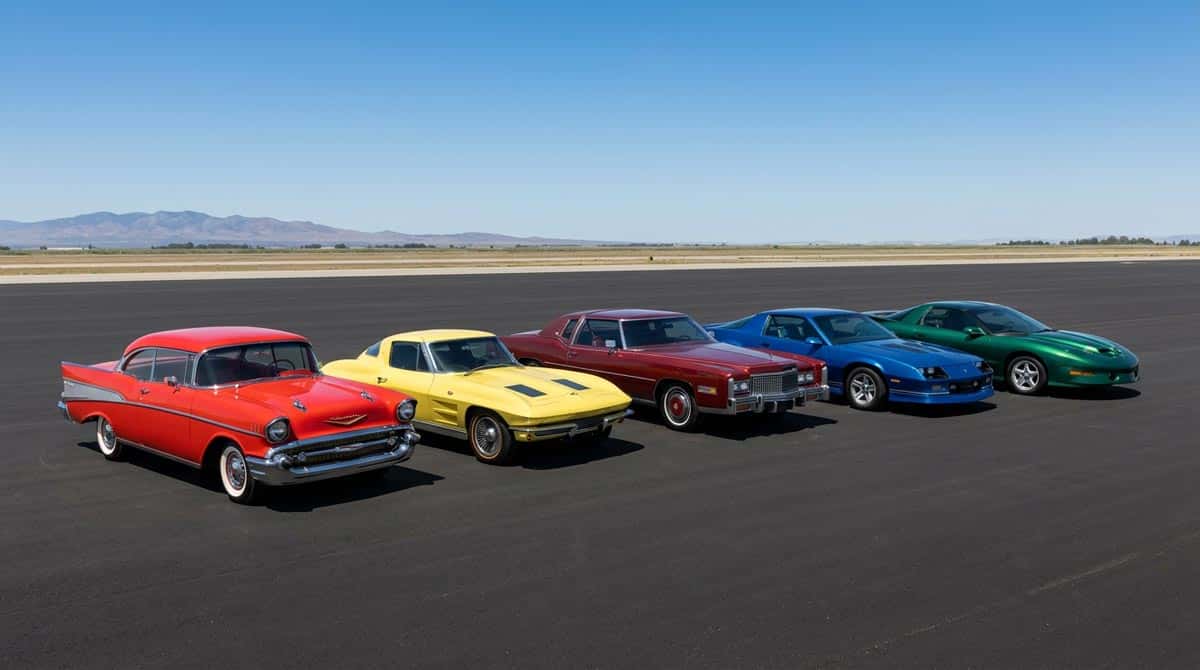
Ford’s approach was engineering-driven. Build the Model T as cheaply and reliably as possible. Don’t change it unless you have to. That worked brilliantly until buyers started wanting something new. GM’s Alfred Sloan watched the stagnation and went a different direction: give people a reason to trade in a car that still runs fine.
The idea was simple. Update the styling every year — new chrome, new body lines, new interior trim. Not necessarily a better car. A newer one. Sloan also built GM’s brands into a ladder: you started with a Chevrolet when money was tight, moved up to Pontiac, then Oldsmobile, then Buick, and if things went really well, Cadillac. One company, five price points, and a built-in reason to keep buying up.
The model year concept spread fast. By the 1950s, every American automaker ran on an annual cycle with fall reveals and spring production changeovers. The concept jumped to Europe and eventually Japan. Today you buy a 2025 Silverado or a 2025 Equinox. The year is right there in the name. That convention exists because Alfred Sloan decided a good car wasn’t enough — a new one was always better.
4. The catalytic converter and clean air standards
The short version: GM introduced the first mass-production catalytic converter in 1975, years ahead of when the full federal mandate took effect. The Clean Air Act required a 90% reduction in hydrocarbon and carbon monoxide emissions compared to 1970 levels. Every gasoline vehicle on earth has had one ever since.
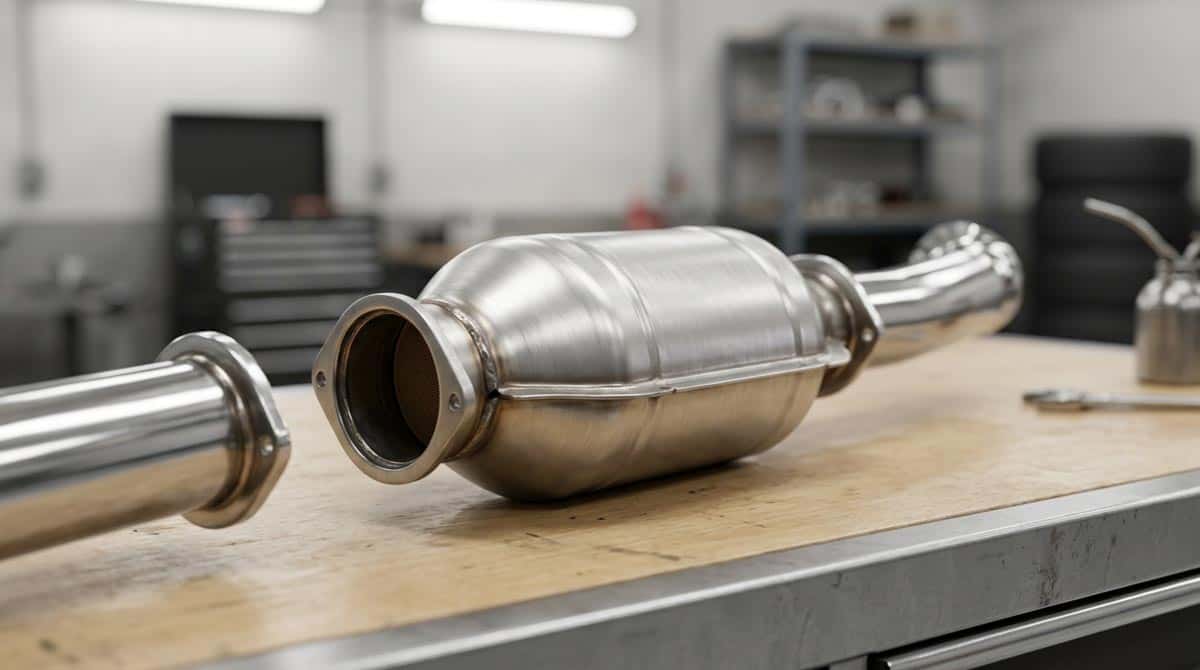
The Clean Air Act of 1970 gave automakers a deadline. Emissions had to drop dramatically by 1975. The industry lobbied hard against the timeline, calling it technically impossible. GM’s engineers decided it wasn’t impossible and started building the solution instead. They partnered with catalyst manufacturers, redesigned exhaust systems, and pushed for unleaded fuel — which was required to keep the converter from poisoning itself.
The unleaded fuel push had a side effect nobody fully anticipated. Leaded gasoline had been linked to neurological damage for decades, especially in children. The switch to unleaded — driven largely by the catalytic converter requirement — contributed to a measurable drop in blood lead levels across the U.S. population through the late 1970s and 1980s. An emissions fix for cars turned out to have a significant public health outcome too.
GM’s early adoption forced the rest of the industry to move. Today’s three-way catalytic converter — standard on every gasoline-powered vehicle globally — is a direct descendant of what went on 1975 Chevrolets and Buicks. The technology moved from American cars to every market on earth. You can’t buy a new gasoline car anywhere in the world without one.
5. OnStar and connected vehicle technology
The short version: GM launched OnStar at the 1996 Chicago Auto Show on 1997 Cadillac models — the first in-vehicle communication and safety system. The connected vehicle category — from Ford’s SYNC to Tesla’s over-the-air updates — starts here.
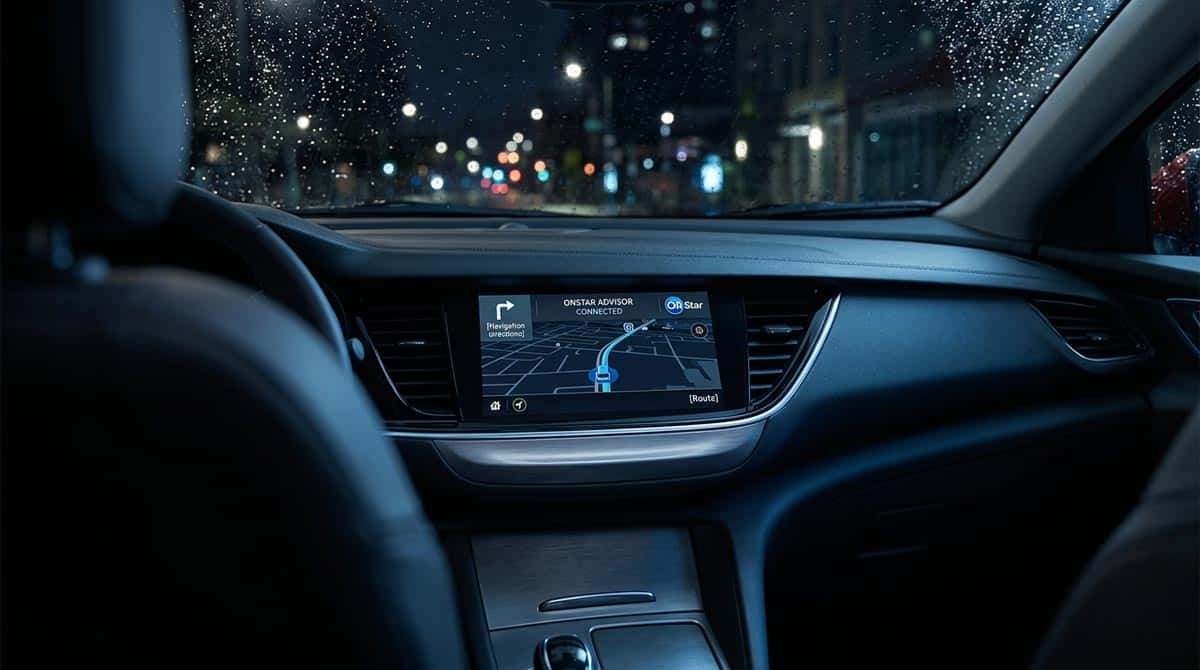
In 1996, the idea of a car that could call for help by itself sounded like science fiction. GM demonstrated it at the 1996 Chicago Auto Show and shipped it in 1997 Cadillacs that year — the DeVille, Seville, and Eldorado. You pressed a button, a live person answered, and they could pinpoint your location, contact emergency services, or unlock your doors remotely. This was three years before the first iPhone, a decade before apps were a thing people thought about.
OnStar proved that a vehicle could be a connected node — not just a machine that drives. That concept now defines the entire industry. Mercedes, BMW, Ford, Toyota — every major manufacturer runs a connected services platform. Tesla built a whole brand identity around over-the-air software updates, a capability that only exists because the industry spent 20+ years building the infrastructure to put a data connection in every car.
The GMC trucks and Chevrolet SUVs Wheelers sells today come with OnStar built in. Automatic crash response, stolen vehicle slowdown, remote start through the app — that’s a direct line from the 1997 Cadillac DeVille. The brand kept developing what it started. And the rest of the industry is still catching up on some of it.
Wheelers Family Auto Group
See the trucks and SUVs that carry this history forward
Chevrolet and GMC. Central Wisconsin. Six locations.
Frequently asked questions
What was GM’s most important invention?
That’s a reasonable argument to have, but the automatic transmission has a strong claim. It’s in virtually every vehicle sold globally today, it changed who could physically operate a car, and it spread to every competitor within a generation of GM’s 1940 Hydra-Matic launch. The catalytic converter is a close second given its global environmental and public health impact.
Did GM invent the model year system?
GM popularized it and made it standard industry practice under Alfred Sloan in the 1920s and 1930s. The idea of annual styling updates to create desire for a newer car even when your current one runs fine came directly from Sloan’s strategy. Every automaker in the world now operates on model year cycles because of how completely that approach took over.
When did GM introduce auto financing?
GMAC launched in 1919. Before that, buying a car meant paying cash in full — which limited the market to buyers who had the full amount on hand. GMAC’s installment plan opened car ownership to a much broader group and helped GM surpass Ford as the top-selling automaker in the U.S. by the late 1920s.
How did GM’s catalytic converter affect other automakers?
GM’s early adoption in 1975 set the standard before the federal mandate fully took effect. Once GM demonstrated that catalytic converter technology was production-viable at scale, the rest of the American industry had to follow. The technology eventually spread to every gasoline vehicle market worldwide. Today there’s no alternative for internal combustion emissions control — the catalytic converter is universal.
Does OnStar still come on new GM vehicles?
Yes. Every new Chevrolet and GMC vehicle comes with OnStar built in. Current features include automatic crash response, stolen vehicle assist, remote start via the myChevrolet or myGMC app, and turn-by-turn navigation. The hardware has changed significantly since the 1997 launch, but the core function — a connected vehicle that can communicate with a real person in an emergency — is the same.
Is GM still innovating today?
GM’s Ultium electric vehicle platform and its Super Cruise hands-free driving technology are the current areas of significant development. Super Cruise, which uses lidar mapping and driver attention monitoring, is considered one of the most capable hands-free highway driving systems currently available in production vehicles. Whether those bets land at the industry-wide scale of the Hydra-Matic or OnStar remains to be seen.
Quick answers
- What year did GM introduce the automatic transmission? 1940, on the Oldsmobile with the Hydra-Matic.
- What does GMAC stand for? General Motors Acceptance Corporation, founded in 1919.
- Who was the GM executive behind the model year strategy? Alfred P. Sloan, GM president from 1923 to 1946.
- What year did GM add catalytic converters to production cars? 1975, across Chevrolet, Buick, Oldsmobile, and Cadillac lines.
- When did OnStar launch? Announced at the 1996 Chicago Auto Show, first shipped on 1997 Cadillac models.
- Do Wheelers GMC trucks come with OnStar? Yes. Every new GMC and Chevrolet vehicle includes OnStar with a trial subscription at purchase.
What this adds up to
GM has had its rough stretches. The 2009 bankruptcy is a chapter that doesn’t get glossed over around here. But the company’s track record of inventing systems that every other automaker adopted is real. The automatic transmission, auto financing, the model year cycle, the catalytic converter, the connected vehicle. Five different decades. Five moves that outlasted the moment they were made.
The Silverado in your driveway or the Equinox in the school pickup line carries all of that forward. Different engineering, different technology, same company. Wheelers has been selling Chevrolet and GMC in central Wisconsin for decades. We know the brand. And the history behind it is worth knowing too.
About the Author
Branden Bodendorfer
Director of Marketing at Wheelers Family Auto Group, a six-rooftop Chevrolet and GMC dealer group in central Wisconsin. Creator of the Key2Success Planner, used in 52+ countries. 20+ years in business and marketing. Featured by ABC World News, NBC Today Show, ESPN, and CNN.
Sources
- General Motors — Corporate History
- U.S. EPA — History of the Clean Air Act
- OnStar — About OnStar
- Sloan, Alfred P. My Years with General Motors. Doubleday, 1964.
- Wheelers Family Auto Group — New Inventory



0 comment(s) so far on 5 Times GM Changed the Auto Industry