


 DIFFERENCE

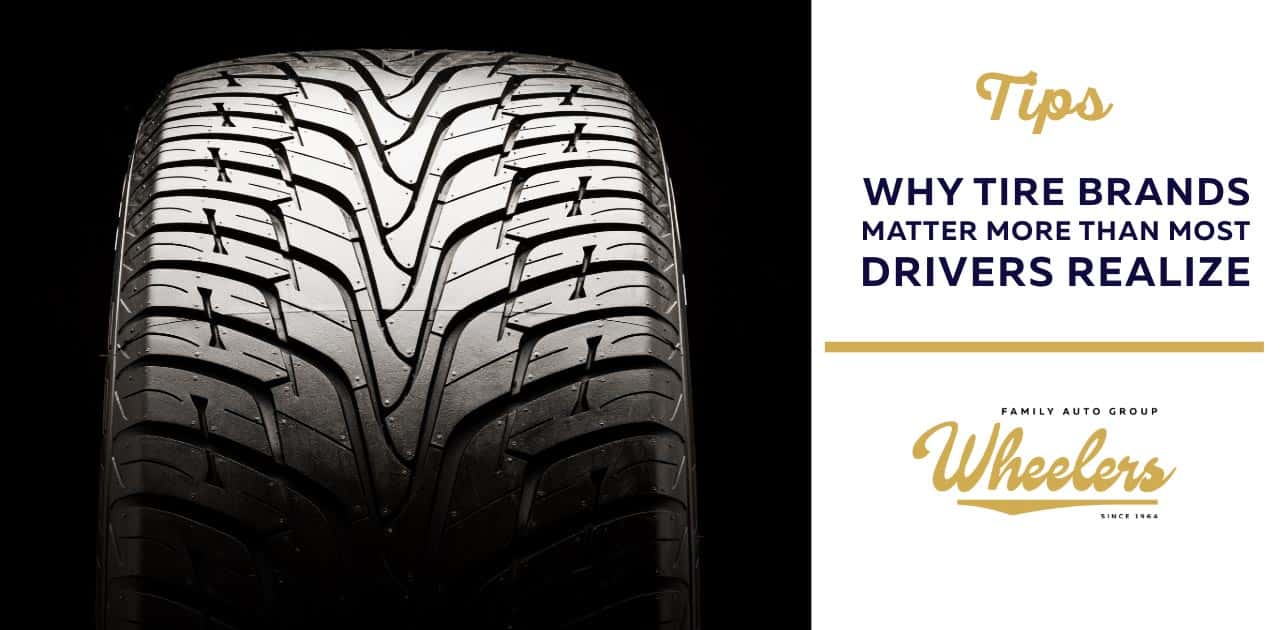
Why Tire Brands Matter More Than Most Drivers Realize
Why Tire Brands Matter More Than Most Drivers Realize
Tire brands matter because not all tires are engineered the same. The gap between a budget brand and a quality brand shows up in wet braking distance, cold-weather grip, highway stability, and how many miles you actually get. For most drivers in central Wisconsin, that difference is worth understanding before you buy.
In This Article
Walk into any tire shop and the price spread is significant. Two tires with the same size code can run anywhere from $80 to $250 each. Some people look at that and figure the cheap ones are fine. A tire is a tire, right?
Not exactly.
The size code tells you what fits your vehicle. It doesn’t tell you anything about how the tire was engineered, what compound the tread is made from, how it performs in a hard rain, or how it handles at 70 mph on a November highway when the temperature drops fast. That’s where brand and build quality come in.
This isn’t about selling you the most expensive option. It’s about understanding what you’re actually buying so the choice makes sense for your vehicle and your driving conditions.
Why the brand on the sidewall actually matters
A tire’s brand reflects years of compound research, testing, and engineering standards. The name on the sidewall is the shorthand for all of that.
Tire manufacturing is more complex than it looks. A single tire contains up to 200 separate materials. The rubber compound formula, the belt construction, the tread pattern geometry, the sidewall stiffness — all of it is engineered together to hit specific performance targets. Major tire manufacturers spend hundreds of millions of dollars annually on research and development to get those targets right.
Budget tire manufacturers largely skip that investment. They reverse-engineer existing designs, use lower-cost rubber compounds, and operate with much looser tolerances on quality control. The tire that comes off the line technically fits your car. But it wasn’t designed from scratch to perform at its best — it was designed to be cheap to make.
According to Consumer Reports’ annual tire testing, the gap between top-rated and budget tires in wet braking alone can be 20 to 30 feet at highway speeds. At 65 mph, 30 feet is about two car lengths. That’s the difference between stopping in time and not stopping in time.
Brand name doesn’t guarantee perfection. But it does reflect a manufacturer’s track record, warranty commitment, and the R&D investment behind every tire on that shelf.
What separates a quality tire from a cheap one
There are a few specific areas where the difference shows up. Not all of them are obvious on a spec sheet.
Rubber compound
The tread compound determines how the tire grips the road, how it wears, and how it performs in heat and cold. Quality manufacturers spend years developing proprietary compounds that stay pliable in cold temps and resist heat buildup at high speeds. Budget tires use generic compounds that harden in the cold and degrade faster under heat. In Wisconsin, where you can go from 70 degrees in September to 15 degrees in January, compound quality matters a lot.
Wet braking performance
This is where most independent testing separates the tiers most clearly. Wet braking performance is driven by tread design (how water channels away from the contact patch) and compound grip on wet pavement. Budget tires consistently underperform here. It’s not a small difference. A 2023 Tire Rack wet braking test showed stopping distances of 15 to 25 feet longer for budget brands compared to top-tier tires at 60 mph.
Construction and belts
The internal structure of a tire — steel belts, nylon cap plies, polyester carcass — determines how well it holds shape at speed, resists punctures, and handles load. Quality brands use more consistent materials and tighter construction tolerances. Budget tires vary more from unit to unit, which affects how predictable the handling feels, especially at highway speeds.
Tread life and wear consistency
A cheap tire might have a decent treadwear rating on paper, but ratings are self-reported by manufacturers. Independent wear testing regularly shows budget tires wearing significantly faster than their ratings suggest. A quality brand’s treadwear rating is backed by real-world validation. The warranty behind it means something.
Noise and ride quality
This one is subjective but real. Quality tire manufacturers run significant noise engineering to reduce road hum and vibration. Budget tires are louder. On a long stretch of highway, that adds up.
How to think about tire tiers
The tire market generally breaks into three tiers. Understanding where you’re buying matters more than chasing any specific brand name.
Premium tier
Michelin, Bridgestone, Goodyear, Continental, Pirelli. These manufacturers lead in R&D investment, independent test results, and tread life warranties. Premium tires are the right choice for high-mileage drivers, performance vehicles, and anyone who drives in serious weather conditions regularly. Yes, they cost more upfront. They also last longer and perform more consistently, which often makes the per-mile cost competitive.
Mid-range tier
Cooper Tires, General Tire, Hankook, Falken, Kumho, Toyo. These brands have strong engineering teams and respectable test results. The gap between a well-rated mid-range tire and a premium tire is smaller than the gap between mid-range and budget. For most daily drivers, a solid mid-range tire is the right balance of performance and price.
Budget tier
This is where you find mostly off-brand or private-label tires — names you may not recognize or have never seen before. Some are fine for low-mileage second vehicles or short-term situations. But for a daily driver, especially in a state with real winters, the performance trade-offs are significant enough to reconsider.
Brands worth knowing
| Brand | Tier | Known for | Good fit for |
|---|---|---|---|
| Michelin | Premium | Tread life, wet performance, overall consistency | High-mileage drivers, families, SUVs |
| Bridgestone | Premium | Highway performance, truck/SUV lineup | Trucks, SUVs, highway commuters |
| Goodyear | Premium | All-season performance, winter options | Year-round driving, varied conditions |
| Continental | Premium | Wet braking, handling precision | Passenger cars, wet-climate drivers |
| Cooper Tires | Mid-Range | Truck/SUV value, all-terrain options | Trucks, off-road use, budget-conscious buyers |
| General Tire | Mid-Range | All-season performance, mileage warranty | Daily commuters, practical buyers |
| Hankook | Mid-Range | Performance handling, good wet scores | Sedans, performance-minded drivers |
| Falken | Mid-Range | All-terrain truck tires, dry handling | Trucks, enthusiast drivers |
This isn’t an exhaustive list, and individual models within any brand vary. A Michelin budget model won’t outperform a Bridgestone’s flagship tire. Buy by model, not just brand name. The service team at Wheelers can walk you through specific model comparisons for your vehicle.
What matters most in Wisconsin
Most of the tire advice you read online is written for a national audience. Wisconsin driving has some specific demands worth calling out.
Cold-weather compound stiffness is a real issue. Budget tires harden noticeably below 40 degrees, which reduces grip even on dry pavement. If you’re running year-round all-season tires, the compound quality matters more here than in warmer climates. Look for tires rated with the Three-Peak Mountain Snowflake (3PMSF) symbol for verified cold-weather performance — not just the M+S designation, which is self-certified and less meaningful.
Wet braking on rural roads matters too. A lot of driving in central Wisconsin happens on county roads, state highways, and roads without much shoulder room. Wet braking distance is more than a test stat out here. It’s the difference between a clean stop and ending up in the ditch.
Load capacity for trucks is something Wisconsin drivers use. If you’re hauling a trailer, running a truck bed with weight in it, or pulling anything seasonally, confirm the load index on any tire you’re considering matches your vehicle’s requirements. Quality brands in the truck tire segment (Bridgestone Dueler, Michelin LTX, Goodyear Wrangler) are engineered specifically for this. Budget truck tires are not.
The short version: the tire performance gaps that matter in a southern state with mild weather and smooth roads matter even more up here. Quality brand selection pays off proportionally more in Wisconsin than in most of the country.
Wheelers Tire Special — Buy 3, Get 1 for $1*
Running now at Wheelers Family Auto Group locations across central Wisconsin. Contact your nearest location to find the right brand and model for your vehicle.
Wheelers’ current tire special
Wheelers is running a Buy 3 Get 1 for $1 tire special right now*. If your tires are getting close, this is a good time to move on it. The service team can help you pick the right brand and model for your specific vehicle and how you drive — commuter, truck, SUV, whatever the situation is.
If you want to read more about what to ask and what to look for when you come in, check out our tire buying guide. It covers the questions to ask, how treadwear ratings work, and what to bundle with a tire install while the wheels are already off.
Schedule your tire appointment or stop into any of our central Wisconsin locations.
Frequently asked questions
What are the most trusted tire brands?
Michelin, Goodyear, Bridgestone, Continental, and Pirelli consistently rank at the top across independent testing. For value-focused buyers, Cooper Tires and General Tire offer solid performance at a lower price point. The right brand depends on your vehicle, driving conditions, and budget.
Are cheap tires dangerous?
Not always dangerous, but cheap tires almost always underperform in the areas that matter most: wet braking distance, handling at highway speeds, and cold-weather grip. In Wisconsin winters, that gap is real. Budget tires also tend to wear significantly faster, which often makes them more expensive in the long run.
Do tire brands matter for trucks and SUVs?
Yes, and arguably more than for passenger cars. Trucks and SUVs carry more weight, which puts more demand on the tire. A quality brand engineered for truck load ratings will handle braking, cornering, and rough terrain better than a budget option with the same size designation.
Is it worth buying the most expensive tire?
Not necessarily. The step up from budget to mid-range is where most of the performance improvement happens. Going from mid-range to premium is often incremental for most drivers. Match the tier to your use case: daily commuter vs. towing vehicle vs. performance car.
Are brand-name tires worth the extra cost?
For most drivers, yes. Brand-name tires carry longer tread wear warranties, better wet-traction ratings, and more consistent quality control. When you factor in how long they last versus a budget tire, the per-mile cost often comes out close or even lower.
What tire brands does Wheelers carry?
Contact any Wheelers Family Auto Group location in central Wisconsin to ask about current tire inventory and available brands. The service team can match you with the right brand and model for your specific vehicle.
Quick answers on tire brands
Common Questions
- What does the Three-Peak Mountain Snowflake symbol mean?
- It means the tire passed standardized cold-weather traction testing. It’s a more meaningful indicator of winter performance than the M+S rating, which is self-certified.
- Is Michelin always the best choice?
- Michelin consistently tops independent tests, but the right choice depends on your vehicle and how you drive. A well-rated mid-range truck tire can outperform a Michelin passenger tire on a pickup.
- Are Goodyear and Dunlop the same?
- Goodyear owns Dunlop (outside Japan). They share some engineering and R&D. Dunlop tends to focus more on performance-oriented fitments.
- What’s the cheapest tire worth buying?
- In the mid-range tier, General Tire and Cooper Tires consistently offer solid value. These aren’t budget brands — they’re backed by real R&D and meaningful warranties.
- How do I verify a tire’s independent test scores?
- Tire Rack (tirerack.com) and Consumer Reports both publish independent test data on wet braking, handling, and tread wear. Worth a quick check before you commit.
- Does tire brand matter for a leased vehicle?
- Yes. Lease agreements often require returning the vehicle with tires of equivalent quality to original equipment. A budget replacement may not satisfy that requirement.
Consumer Reports — Tire Ratings and Testing
Tire Rack — Independent Tire Testing and Consumer Surveys
National Highway Traffic Safety Administration — Tire Safety
Tire Rack — Understanding Tire Tier Differences
*for a limited time while the deal lasts. See store for details.


0 comment(s) so far on Why Tire Brands Matter More Than Most Drivers Realize