


 DIFFERENCE

GMC Sierra HD 6.6L Gas vs 6.6L Diesel: Key Differences and Buyer Guide for Wausau Drivers
GMC Sierra HD 6.6L Gas vs 6.6L Diesel: Which Engine Is Best for Your Needs?
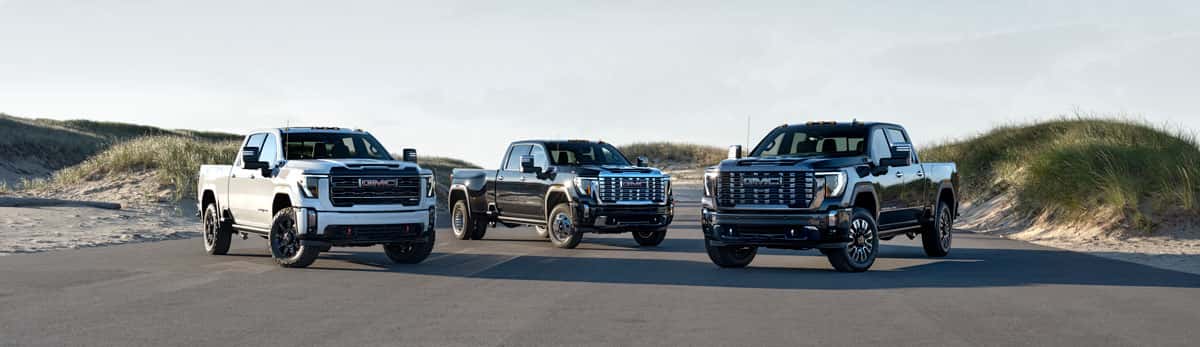
The GMC Sierra HD offers two distinct 6.6L V8 engines: a 6.6L gas V8 tuned for broad power and a 6.6L Duramax turbo-diesel engineered for torque and heavy-duty towing. This article explains how those engine architectures differ in horsepower, torque, towing and payload behavior, fuel and DEF costs, maintenance expectations, and real-world buyer profiles so you can decide which powerplant fits your needs. Readers will get clear, example-driven comparisons for Sierra 2500HD and 3500HD models, concise tables for quick stat lookups, and practical ownership math to weigh initial price versus five-year costs. The guide also outlines where Wausau drivers can see and test-drive both engine options locally and how a transparent, relaxed buying experience can simplify choosing between gas and diesel. Throughout, keywords like GMC Sierra HD, 6.6L gas, 6.6L Duramax, Allison 10-speed transmission, and Wausau are used to connect technical differences to practical ownership decisions.
What Are the Key Performance Differences Between the 6.6L Gas and 6.6L Duramax Diesel Engines?
The core performance distinction is power curve: the 6.6L gas engine produces strong peak horsepower for on-road acceleration, while the 6.6L Duramax turbo-diesel delivers substantially more peak torque for low-end pulling power. Torque versus horsepower shapes how each truck behaves under load; higher diesel torque improves control and sustained speed when towing heavy trailers. The Allison 10-speed transmission complements both engines by keeping each powerplant in its optimal band, smoothing shifts and improving drivability during towing. Below is a compact spec comparison to highlight these differences for quick reference.
| Engine Option | Peak Horsepower | Peak Torque |
|---|---|---|
| 6.6L V8 gas | 401 hp | 464 lb-ft |
| 6.6L Duramax Turbo-Diesel V8 | 470 hp | 975 lb-ft |
| Transmission (shared) | Allison 10-speed | Optimized shift logic |
This table shows the diesel’s torque advantage that directly translates to higher towing capability and stronger performance under sustained loads. Understanding these raw numbers helps you match an engine to how often and how hard you tow.
How Do Horsepower and Torque Compare Between the Gas and Diesel Engines?
Peak output numbers summarize mechanical capability: the 6.6L gas typically rates around 401 horsepower and 464 lb-ft of torque, while the 6.6L Duramax is rated near 470 horsepower with about 975 lb-ft of torque. Higher torque on the Duramax means it pulls heavier loads at lower RPMs, making acceleration under load feel stronger and reducing transmission strain during sustained towing. Horsepower still matters for highway passing and unloaded acceleration, so drivers wanting quicker on-road response may prefer the gas V8. The Allison 10-speed transmission manages gear selection to keep the chosen engine in its most effective range for either performance or efficiency.
Duramax 6600 Diesel Engine Design for GM Pickup Trucks
A new Diesel engine, called the Duramax 6600 (Fig.1), has been designed by Isuzu Motors (Isuzu) for an upcoming full-size General Motors (GM) pickup truck. It incorporates the latest Diesel technology in order to improve on the inherent strengths of a Diesel engine, such as fuel economy, torque and reliability, while also producing higher output, smoother driveability, and lower noise. The Duramax 6600 is an entirely new 90° V8 direct injection (DI) intercooled engine with a water-cooled turbocharger. Its fuel injection system employs a fully electronically controlled common rail system that has high-pressure injection capabilities.Isuzu had the design responsibility of the base engine, while GM Truck Group was responsible for designing the installation and packaging within the vehicle. Engine validation relied on Isuzu’s proven validation process, in addition to GM Powertrain’s expertise in engine validation. Engine calibration work in the vehicle was undertaken by a joint team of Isu
What Are the Towing and Payload Capacities for Each Engine Option?
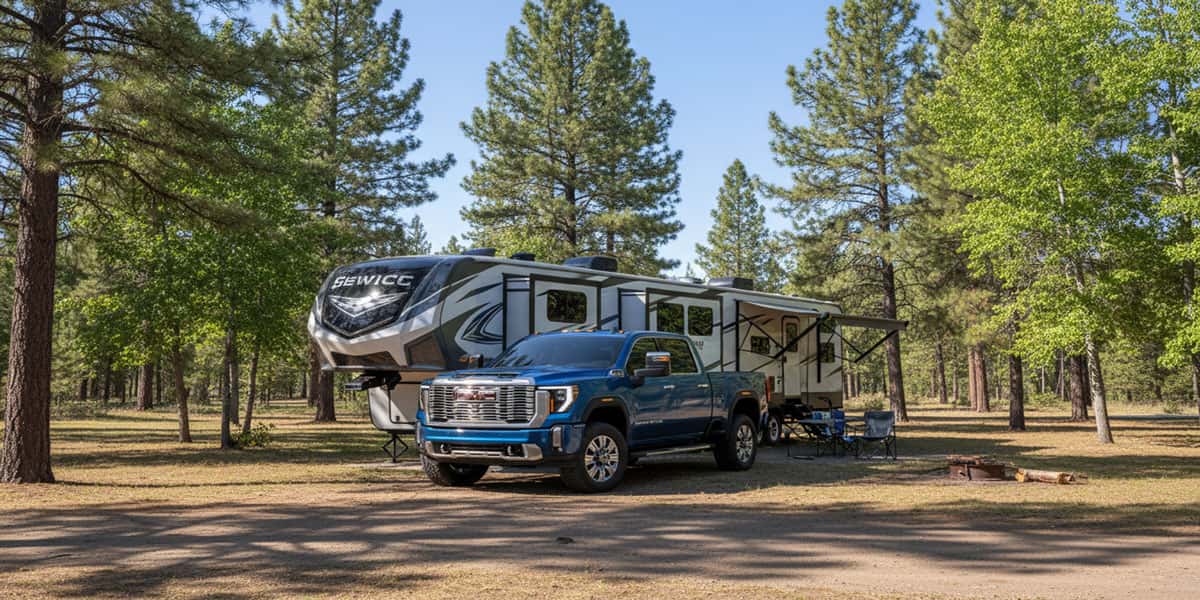
Towing and payload figures vary by Sierra 2500HD vs 3500HD and by configuration, but the diesel’s higher torque generally raises maximum trailer ratings and sustained-gooseneck limits. For heavy fifth-wheel or gooseneck towing, the Duramax-equipped 3500HD configurations deliver the highest certified tow capacities, while gas-equipped 2500HD and 3500HD setups offer strong but lower maxima. Payload can be slightly lower in diesel trucks because the engine and aftertreatment hardware add weight, so cargo and cab configuration choices matter when maximizing payload. Assessing expected trailer weight and payload needs together reveals which engine best fits your routine loads.
How Does the Allison 10-Speed Transmission Enhance Engine Performance?
The Allison 10-speed transmission extends gear range and shifts strategically to preserve the engine in its optimal power band, improving both towing control and fuel economy under varying loads. For diesel applications, the transmission reduces shift frequency during heavy towing, minimizing driveline shock and maintaining steady pull. With the gas V8, the Allison transmission enables brisk acceleration and smooth highway cruising by selecting gears that keep horsepower available for overtaking. Overall, Allison’s calibration is a key meronym of the drivetrain that delivers a consistent driving experience across both engine choices.
How Do Fuel Economy and Operating Costs Differ Between the 6.6L Gas and Diesel Sierra HD?
Diesel fuel economy typically outperforms gas in highway towing and long-distance hauling because the Duramax’s torque and efficiency at low RPMs reduce fuel consumption under load. However, diesel ownership involves additional operating elements—most importantly diesel exhaust fluid (DEF) for aftertreatment systems—which adds recurring cost and occasional service attention. Real-world MPG varies widely with towing, terrain, and load, so conservative estimates are best when projecting annual fuel spend. The short table below compares estimated annual operating cost components for a representative user to illustrate how fuel, DEF, and routine maintenance interact over a year.
| Vehicle Scenario | Fuel + DEF Estimated Annual Cost | Maintenance Notes |
|---|---|---|
| 6.6L Gas (moderate towing) | $4,200 | Typical oil/filter costs; NO DEF |
| 6.6L Duramax (moderate towing) | $3,600 + DEF | DEF adds small recurring cost; diesel filters more frequent |
| Differential factor | Diesel may save fuel but add DEF/filters | Net depends on miles and towing frequency |
What Is the Estimated Fuel Economy for Gas vs. Diesel Engines?
EPA-style ratings often underrepresent heavy-duty, real-world towing conditions, but the diesel Duramax usually posts higher highway MPG when towing or cruising at steady speeds thanks to its torque advantage and combustion efficiency. The gas 6.6L tends to return acceptable fuel economy for lighter-duty use and urban driving where diesel’s efficiency advantages are less pronounced. Variables like trailer aerodynamics, payload, altitude, and driving style can swing real-world MPG considerably, so using conservative figures based on expected duty cycle yields better ownership forecasts. For drivers who mostly tow heavy loads or log long highway miles, the Duramax often shows the clearest MPG benefit.
Duramax 6600 Emissions Control and Performance for GMC Sierra
The newly developed Duramax 6600 V8 Diesel engine has incorporated a lot of the latest technologies to achieve better fuel economy and lower exhaust emissions. It will provide the GMC Sierra and Chevrolet Silverado with a Diesel engine to satisfy a multitude of major customer requirements such as higher output, lower fuel consumption, comfortable V8 sound, high reliability and good driveability. An optimized combustion system coupled with a four-valve per cylinder configuration, high pressure common rail fuel injection system, new design combustion chamber and valve covered orifice (VCO) nozzle enables to meet 1998 U. S. Environmental Protection Agency (EPA) emission standards for heavy-duty diesel engines without exhaust gas recirculation (EGR) and aftertreatment.After a short review of the emission standards in the United States and the general features of the new engine, the effects of the emission devices will be discussed such as air and exhaust gas ducting, combustion chamber geo
How Do Diesel Exhaust Fluid and Fuel Costs Affect Diesel Ownership?
Modern diesel engines require DEF to meet emissions standards, and DEF consumption is proportional to engine load and distance driven. DEF adds a periodic refill cost and one more fluid to monitor during maintenance, and DEF system components are part of diesel-specific service intervals. While diesel price per gallon can fluctuate relative to gasoline, the Duramax’s superior fuel efficiency under load often offsets the added DEF expense for high-mileage or heavy-towing users. Planning for DEF and diesel filter replacements in ownership budgets prevents surprises and improves long-term cost predictability.
What Are the Long-Term Maintenance Costs for Each Engine Type?
Diesel trucks typically require specialized maintenance items—such as fuel system servicing, DEF system checks, and more robust filtration—that can raise long-term service costs relative to gasoline engines. Gas engines benefit from broader service availability and generally lower-cost consumables, which can reduce routine expense for owners who tow occasionally and keep mileage moderate. Conversely, diesel engines often achieve longer lifespans when maintained properly, making them economically attractive for commercial operators and heavy users despite higher per-service prices. Factoring expected service intervals, parts complexity, and local service expertise helps determine which engine minimizes total maintenance spend over time.
Which Engine Is More Reliable and Suitable for Different Driving Needs?
Reliability patterns follow usage: diesel longevity advantages emerge under consistent heavy loads and high annual mileage, whereas a gas engine’s simpler architecture suits owners seeking lower routine service complexity. For buyers whose primary use is daily driving with occasional light towing, the gas 6.6L delivers dependable performance with simpler maintenance. For those towing frequently, hauling heavy equipment, or operating commercially, the Duramax’s torque and durability typically prove more reliable in service life and resale perception. Below are practical buyer profiles to match engines to needs.
- Daily drivers with light towing: Prefer the 6.6L gas for simpler maintenance and lower upfront cost.
- Contractors and frequent haulers: Prefer the 6.6L Duramax for torque, towing capacity, and longevity under load.
- Mixed-use owners who tow occasionally: Choose based on expected peak trailer weight and payload priorities.
What Are the Longevity and Common Maintenance Issues for Gas and Diesel Engines?
Diesel engines often demonstrate extended thermal and structural durability when serviced correctly, but they require attention to fuel system components, emission aftertreatment, and DEF system maintenance. Gas engines have fewer emission-related systems and simpler fuel delivery hardware, which can mean lower-cost repairs and quicker service intervals in many shops. Common diesel concerns include injector and turbocharger upkeep, while gas engines more commonly face typical ignition, cooling, and sensor wear items over time. Regular, condition-based service provides the best path to reliability for both engine types.
Who Should Choose the 6.6L Gas Engine?
Choose the 6.6L gas V8 if most of your driving is daily commuting, occasional towing, or if you prioritize lower routine service complexity and a smaller upfront investment. The gas engine suits buyers who value simpler maintenance, broader service availability, and strong horsepower for on-road acceleration without regularly exceeding moderate trailer weights. If you plan mostly local driving and only occasional fifth-wheel or gooseneck trips, the gas option often delivers the best balance of capability and ownership simplicity. Evaluating expected annual miles and typical trailer weights clarifies if gas meets your real needs.
Who Benefits Most from the 6.6L Duramax Diesel Engine?
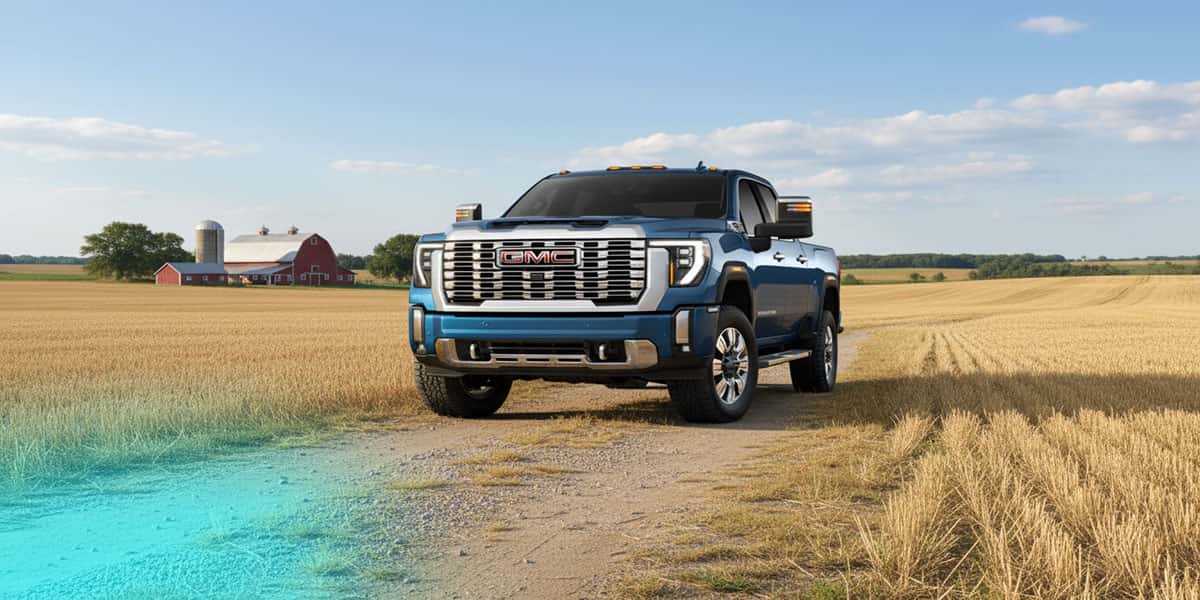
The 6.6L Duramax diesel is best for owners who tow heavy loads frequently, run high annual mileage, or require the extra torque for prolonged hill climbs and commercial duty. Buyers operating as contractors, agricultural users, or long-distance tow operators will find the diesel’s torque curve and longevity advantages translate to real productivity and lower downtime. Additionally, those who prioritize maximum towing ratings for gooseneck or fifth-wheel applications will often need the Duramax-equipped Sierra 3500HD configurations. For this group, diesel’s higher initial cost can be recouped through fuel efficiency under load and stronger resale demand for diesel trucks.
How Do Initial Purchase Price and Total Cost of Ownership Compare for Gas vs. Diesel?
The Duramax option typically carries an upfront premium over the 6.6L gas due to its turbocharged hardware, emissions aftertreatment, and stronger internal components. Over time, diesel’s higher resale value and fuel efficiency under heavy use can offset the initial outlay for owners who tow often or run high annual miles. Below is a concise five-year snapshot comparing purchase premium, resale tendency, and recurring costs to clarify the typical ownership math for buyers weighing gas versus diesel.
| Ownership Element | 6.6L Gas | 6.6L Duramax Diesel |
|---|---|---|
| Typical premium at purchase | Lower | Higher (option premium) |
| Resale tendency | Good | Often stronger resale value |
| Fuel/DEF & maintenance | Standard gasoline costs | Lower fuel cost under load + DEF and diesel-specific maintenance |
What Is the Price Difference Between the 6.6L Gas and Diesel Sierra HD Models?
Expect a notable option premium for the Duramax installation driven by the engine itself, emissions equipment, and often associated towing packages. That premium reflects tangible capability gains—mainly torque and towing capacity—so the key question is whether your expected usage will recover that cost through fuel savings, resale, or productivity gains. When evaluating MSRP or dealer pricing, compare equipped configurations and intended trailer/payload combinations to determine if the diesel premium makes financial sense for your use case.
How Does Resale Value Different Between Gas and Diesel Sierra HD Trucks?
Diesel-equipped heavy-duty trucks historically command a resale premium in many markets because of perceived longevity and towing capability, especially among buyers seeking high-capacity haulers. Factors such as maintenance history, total miles, and regional demand will influence resale outcomes, so local market conditions matter when estimating future value. Checking local inventory trends and resale patterns provides a clearer picture of how much of the diesel premium you might recover at trade-in or resale.
What Are the Overall Ownership Costs Over Time?
Total cost of ownership includes the initial price delta, fuel and DEF expenses, scheduled maintenance, and resale/depreciation. A conservative scenario for a heavy-towing owner shows diesel reducing net fuel spend but adding DEF and higher per-service costs; conversely, a light-use owner often finds the gas option cheaper over three to five years. Use your expected annual miles, average trailer weight, and local fuel price patterns to model three- to five-year ownership outcomes and decide which engine aligns with your financial goals.
After reviewing ownership math, Wausau-area buyers can compare local availability and transparent pricing to match real offers against modeled costs.
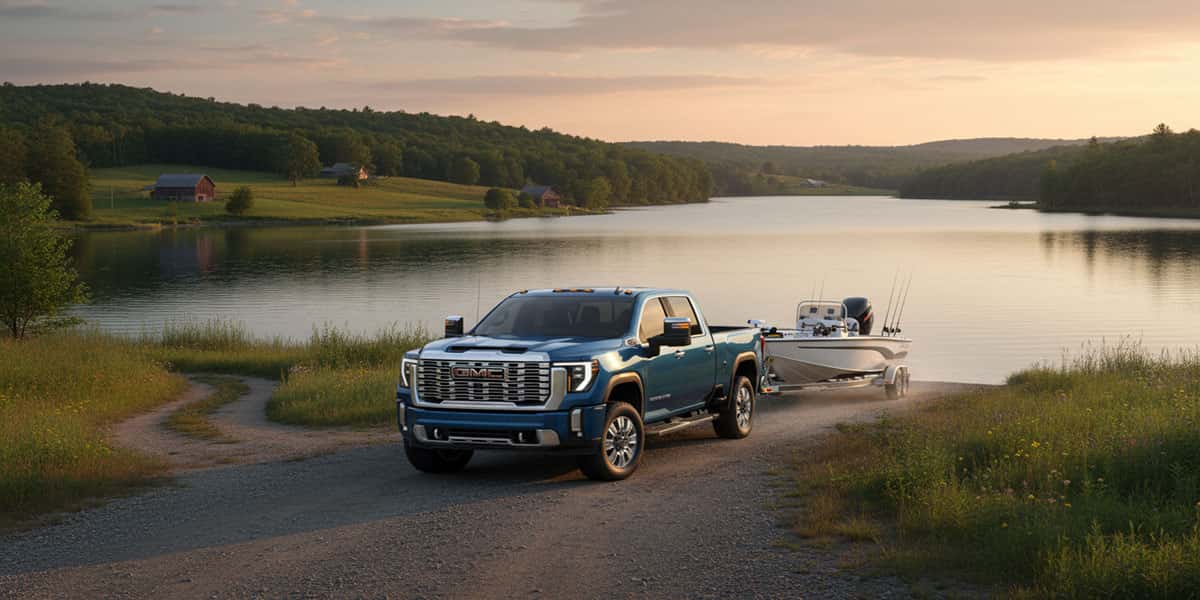
Where Can Wausau Drivers Find and Test Drive the GMC Sierra HD with Their Preferred Engine?
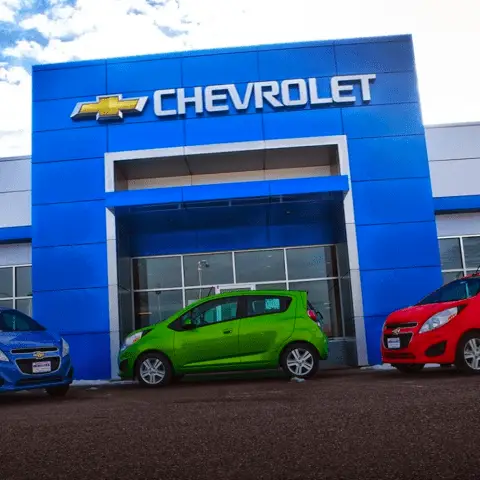
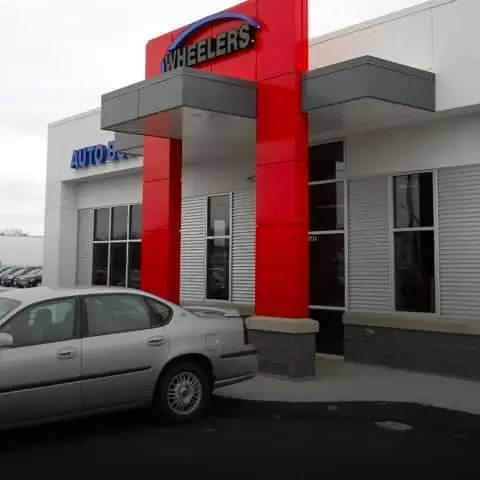
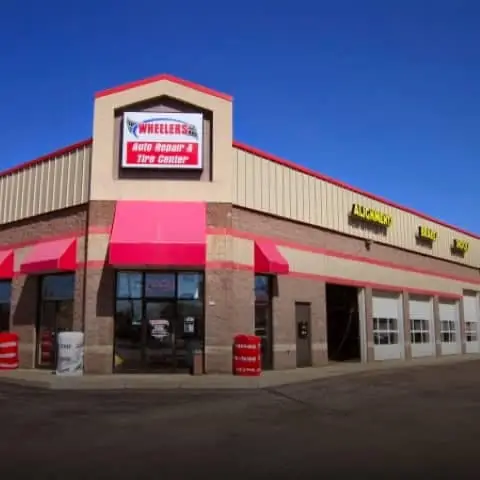
Wausau drivers can explore both Sierra HD 2500HD and 3500HD models with 6.6L gas or 6.6L Duramax diesel through local dealer inventories and scheduling tools. Wheelers Family Auto Group appears as a regional, multi-location Chevrolet & GMC vehicle sales group serving the area and offering a relaxed, transparent buying process, which helps buyers compare engine options without high-pressure sales tactics. The dealer’s emphasis on non-commission sales staff and transparent pricing makes it easier to evaluate option packages, estimated premiums, and trade-in or financing resources when choosing between gas and diesel. Below are practical steps to find, evaluate, and test-drive Sierra HD trucks locally.
- Review available Sierra HD models and filter by engine preference to narrow suitable stock.
- Arrange a test drive of both engine types to compare real-world acceleration, towing feel, and transmission behavior.
- Discuss transparent pricing, trade-in valuation, and online purchase options to streamline decision-making.
Following these steps ensures you experience both engines under local driving conditions and pair those impressions with clear pricing information. Wheelers Family Auto Group’s online purchasing option and relaxed buying experience can simplify acquiring the configuration you select, while their central hub resources help with inventory and service follow-up.
What Sierra HD Gas and Diesel Models Are Available at Wheelers Family Auto Group?
Inventory at a regional Chevrolet & GMC dealer like Wheelers Family Auto Group typically includes GMC Sierra HD 2500HD and 3500HD models offered with both 6.6L gas and 6.6L Duramax diesel engine options. Because stock changes frequently, prospective buyers should filter new-vehicle listings by engine type and cab/bed configuration to identify exact matches before visiting. The dealer’s multi-location presence in Wisconsin and role as a local hub for inventory and customer information supports Wausau drivers in locating the precise Sierra HD setup they want. Contacting the dealer for current availability ensures time-efficient test drives and comparison.
How Does Wheelers’ Transparent Pricing and Relaxed Buying Experience Benefit You?
A non-commission sales approach combined with transparent pricing reduces sales pressure, simplifies comparing gas vs diesel package costs, and clarifies the true premium for diesel-equipped configurations. This relaxed buying environment helps buyers focus on matching engine capability to real towing and payload needs without negotiating complexity or hidden fees. The option to purchase vehicles fully online further accommodates buyers who prefer a streamlined purchase path after confirming vehicle specs and test-driving locally. These dealer practices support confident decisions aligned with ownership cost calculations and use-case priorities.
How Can You Schedule a Test Drive or Consultation in Wausau?
To schedule a test drive or consultation, Wausau drivers should use the dealer’s new-vehicles listing and scheduling tools to request appointments and specify engine preference, enabling staff to prepare comparative vehicles for a side-by-side evaluation. Mention your typical towing scenario and desired payload to ensure the dealership matches you with appropriately configured Sierra HD trucks for test drives. If you prefer a low-pressure option, take advantage of the relaxed buying approach and online purchase capability to complete paperwork remotely after selecting the desired engine and configuration. Confirming appointment details with the dealer ahead of arrival maximizes the value of an in-person comparison.
View Available GMC Sierra HD Inventory
Contact your local Wheelers Dealership in Wisconsin for the latest model specifications and availability.


0 comment(s) so far on GMC Sierra HD 6.6L Gas vs 6.6L Diesel: Key Differences and Buyer Guide for Wausau Drivers