


 DIFFERENCE

What to Ask and What to Look for When Buying New Tires
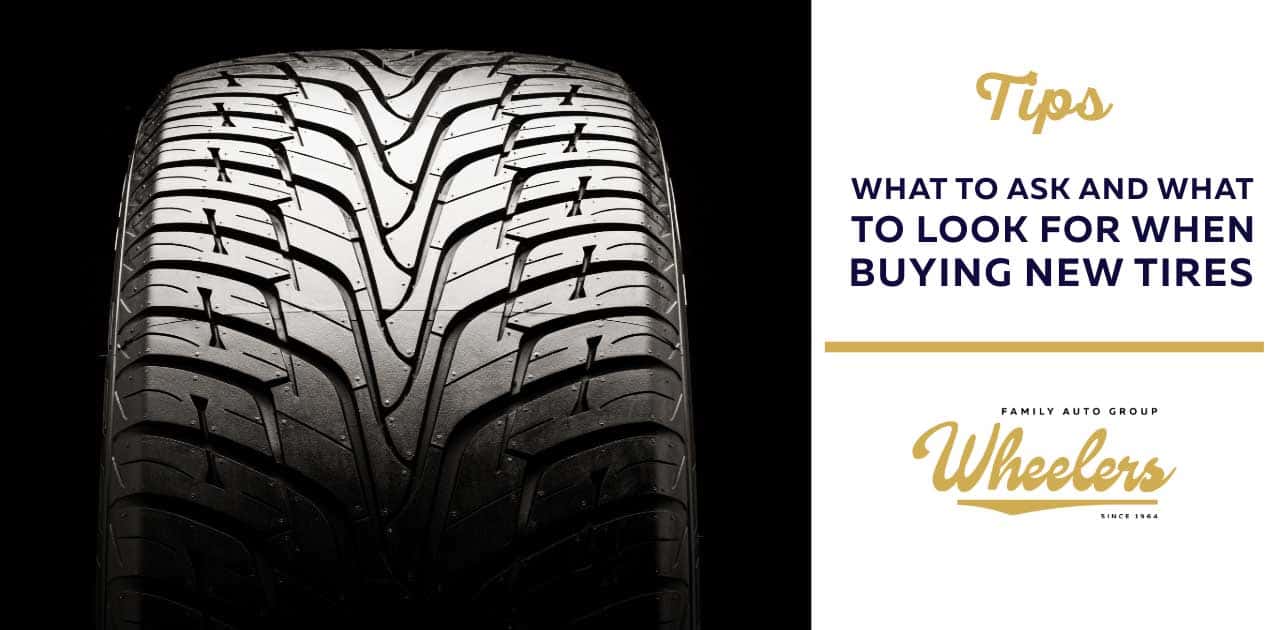
What to Ask and What to Look for When Buying New Tires
Buying new tires comes down to three things: the right size for your vehicle, the right type for your driving conditions, and a tread wear rating that matches how many miles you put on. Ask those questions before you say yes to anything, and you’ll drive away on the right set.
In This Article
Most people replace tires when there’s no choice left. The tread is gone, it’s getting close to winter, or they picked up a nail on a county road somewhere between here and Wausau. And because it’s a last-minute purchase, they end up just saying yes to whatever’s available without asking a single question.
That’s how you end up with the wrong tires.
Tires aren’t complicated, but there are a handful of things worth knowing before you sign off. This guide covers the questions to ask, the numbers to understand, and what services make sense to pair with a new set. If you’ve been putting it off, Wheelers is also running a Buy 3 Get 1 for $1 tire special right now, so the timing is good.
Start with size and type
The tire size for your vehicle is already decided. What you’re choosing is the brand, tread type, and how long you want them to last.
Before anything else, you need the right size. Tire sizing is a standardized code printed on the sidewall of your current tire and listed on a sticker inside your driver-side door jamb. It looks something like P225/65R17. That code tells you the tire’s width, aspect ratio, construction type, and rim diameter. Change any of those numbers without knowing what you’re doing and you’re looking at fitment problems and possible safety issues.
The good news: you don’t need to memorize any of that. The team at Wheelers pulls your vehicle’s specs in seconds. But knowing the code exists means you can verify what you’re being sold before you agree to it.
Tire types to know
All-season tires are what most central Wisconsin drivers run year-round. They handle summer heat, fall rain, and light snow well. They’re a solid middle-ground choice.
Winter/snow tires use a softer rubber compound that stays pliable at low temps and a deeper tread pattern designed specifically for ice and snow. If you’re driving a lot of rural routes between November and March, winter tires make a real difference. The tradeoff is you swap them on and off seasonally.
Performance tires are built for handling and grip, but they wear faster and don’t like cold weather. On a truck or SUV in Wisconsin, they’re usually the wrong call.
Truck and SUV tires are rated for heavier loads and come in highway terrain (HT) or all-terrain (AT) tread patterns. If you’re hauling or heading off-road regularly, the tread pattern matters.
Understand tread wear ratings
Every tire manufactured for street use carries a UTQG rating — Uniform Tire Quality Grading. The U.S. government requires it. It covers three things: treadwear, traction, and temperature.
Treadwear is a number. A tire rated 400 theoretically lasts twice as long as a tire rated 200 under the same controlled conditions. Most good all-season tires land between 400 and 700. A 700+ rating means you’re buying for longevity. Under 300 usually means a performance tire that wears fast.
Traction is graded AA, A, B, or C. AA is the best wet-road stopping performance. Most quality passenger tires are rated A or AA. Anything lower is worth asking about.
Temperature is graded A, B, or C based on how well the tire dissipates heat at high speeds. A is highest. Most tires you’d consider buying should be A or B.
According to the National Highway Traffic Safety Administration, nearly 11,000 tire-related crashes occur annually in the U.S. — and worn-out tires are a leading cause. A higher treadwear rating is a straightforward way to stay ahead of that.
Questions to ask before you buy
Walk in knowing these questions. A good tire shop will answer all of them without hesitation.
1. Is this the right size for my vehicle?
Ask them to verify it against your door jamb sticker or owner’s manual, not just what’s been on the car before. Sometimes previous owners put the wrong size on.
2. What’s the treadwear rating?
Get a specific number. If they can’t tell you, that’s a red flag. Compare it to a few options in the same price range before deciding.
3. Is this the right tire for my driving conditions?
Tell them where you drive most — city, highway, gravel roads, seasonal use. The right answer changes depending on your situation. In Wisconsin, “all-season” covers most drivers, but it’s worth confirming.
4. What warranty comes with these tires?
Most quality tires carry a mileage warranty (typically 40,000 to 80,000 miles depending on the tire). Ask what it covers and what voids it. Road hazard coverage is separate from the mileage warranty, so ask about that specifically too.
5. Do I need to replace all four, or just two?
This depends on your vehicle and how much tread the other tires have. On an all-wheel-drive vehicle like most GM trucks and SUVs, running mismatched tread depths can stress the transfer case and differential. On a front-wheel-drive car, replacing just the two front tires is sometimes fine. Ask and get a real answer.
6. What’s included in the installation price?
Some shops charge separately for mounting, balancing, disposal of old tires, and valve stems. Ask what’s in the quoted price so there are no surprises at the register.
Services to ask about at the same time
New tires are a good reason to take care of a few other things while the wheels are already off.
Wheel alignment: Misaligned wheels wear new tires unevenly and fast. If your car has been pulling to one side or you’ve hit any significant potholes this spring, ask about an alignment check. A wheel alignment at Wheelers runs less than most people expect and extends the life of new tires considerably.
Tire rotation schedule: Ask how often to rotate and whether the shop will remind you. Rotating every 5,000 to 7,500 miles is the standard recommendation. Most drivers skip it and wonder why their tires wear out early.
Tire pressure monitoring system (TPMS): If your vehicle has a TPMS sensor (any vehicle built after 2008 does), ask whether the sensors were checked during installation. Sometimes they need to be reset or replaced when tires are swapped.
Brake inspection: While the wheels are off for tire installation, it takes about two minutes to look at your brake pads and rotors. Worth asking. If there’s an issue, better to know now than to discover it on a slick highway.
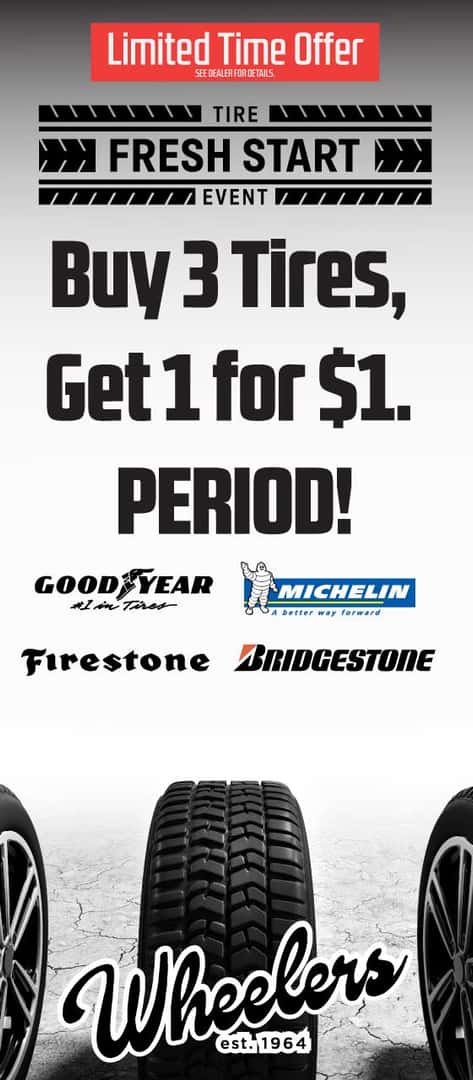
Wheelers Tire Special — Buy 3, Get 1 for $1
Running now* at Wheelers Family Auto Group locations across central Wisconsin. Contact your nearest location to schedule.
Wheelers’ current tire special
Right now, Wheelers is running a Buy 3 Get 1 for $1 tire special*. If you’re driving on a set that’s getting close to the end of its life, this is a good time to act. Replacing all four at once makes the most sense financially and practically, especially heading into summer and fall driving season.
The service team at Wheelers can verify the right size and type for your vehicle, check your alignment, and have you back on the road the same day in most cases. Contact any of our central Wisconsin locations to get started.
Frequently asked questions
How do I know what size tires my vehicle needs?
Check the sticker on the inside of your driver-side door jamb or your owner’s manual. The size is a code like P225/65R17. The team at Wheelers can look it up for you in seconds if you’re not sure.
What’s the difference between all-season and winter tires?
All-season tires handle typical road conditions including light snow. Winter (snow) tires use a softer rubber compound and deeper tread patterns designed specifically for ice and heavy snow. In Wisconsin, winter tires make a real difference from November through March.
How long should new tires last?
Most passenger tires last between 40,000 and 70,000 miles depending on tread wear rating, driving habits, and how well you maintain them. Regular rotations every 5,000-7,500 miles extend life significantly.
Do I need to replace all four tires at once?
Not always, but it depends on your vehicle. All-wheel-drive vehicles often require all four tires to be replaced together to avoid damaging the drivetrain. For front-wheel or rear-wheel-drive vehicles, replacing in pairs is generally recommended.
What is UTQG and why does it matter?
UTQG stands for Uniform Tire Quality Grading. It grades tires on treadwear, traction, and temperature resistance. A higher treadwear number means longer-lasting tires. Look for a traction grade of A or AA for best wet-road performance.
What is Wheelers’ current tire special?
Wheelers is currently running a Buy 3 Get 1 for $1 tire special. Contact any Wheelers location in central Wisconsin to schedule service and take advantage of the deal.
Quick answers on tires
Common Questions
- How do I check my tread depth?
- Use a quarter. Insert it upside down into the tread groove. If you can see above Washington’s head, you’re at or below 4/32″ — time to replace.
- What does “load index” mean?
- It’s a number on the sidewall that indicates the maximum weight the tire can support. Match or exceed your vehicle’s original load index rating.
- Can I mix tire brands?
- It’s not recommended. Different brands have different handling characteristics. If you’re replacing two, match the brand and model of the existing pair on the same axle.
- What’s a good treadwear number?
- For most daily drivers, 500 to 700 is a solid range. It means a long-lasting tire without sacrificing grip.
- How do I know if my alignment is off?
- Your car pulls to one side, your steering wheel is off-center driving straight, or your tires are wearing unevenly.
- When should I check tire pressure?
- Monthly, minimum. Check when the tires are cold, before driving. Wisconsin temperature swings between seasons can drop pressure by several PSI overnight.
Your tire buying checklist
Before You Buy
- Know your current tire size (check door jamb sticker or owner’s manual)
- Check your current tread depth with a quarter or tread gauge
- Decide on tire type: all-season, winter, or truck/SUV terrain
- Ask for the UTQG treadwear rating on any tire you’re considering
- Confirm traction grade is A or AA
- Ask whether your vehicle requires all four replaced at once
- Ask what’s included in the installation price (mounting, balancing, disposal, valve stems)
- Ask about the mileage warranty and road hazard coverage
While You’re There
- Ask for a wheel alignment check
- Ask about TPMS sensor reset or replacement
- Ask for a quick brake inspection while the wheels are off
- Set a reminder for your first tire rotation (5,000-7,500 miles)
That’s the whole list. None of it is complicated. But asking the right questions before you hand over your keys means you leave with the right tires, a clear warranty, and no surprises down the road.
And right now, with Wheelers’ Buy 3 Get 1 for $1 special, there’s good reason not to wait. Schedule your tire appointment online or stop into any Wheelers location in central Wisconsin.
National Highway Traffic Safety Administration — Tire Safety
NHTSA Tire Safety Booklet
Tire Rack — UTQG Ratings Explained
Consumer Reports — Tire Ratings and Reviews
*Buy 3 Get 1 for $1 tire deal is for a limited time, ending May 31, 2026.


0 comment(s) so far on What to Ask and What to Look for When Buying New Tires